
Learn how mechanical dynamics connects motion, force, inertia, vibration, and machine reliability. Compare hand calculations, simulation software, and engineering support using practical selection criteria.
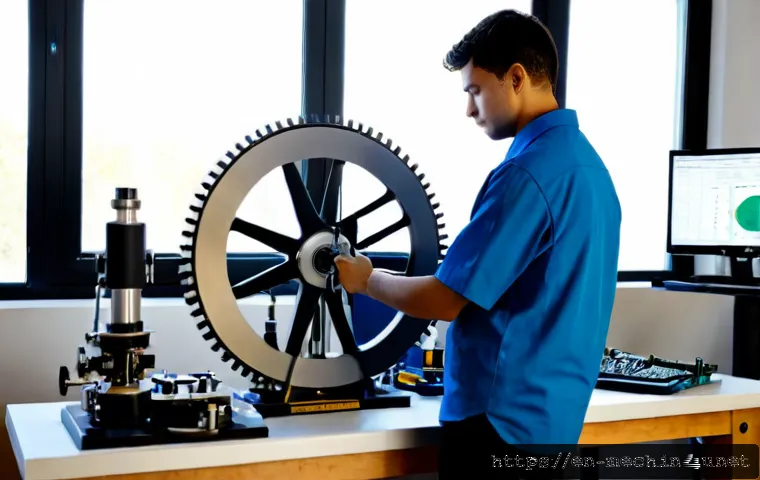
Mechanical dynamics analysis is necessary when a machine’s motion creates meaningful acceleration forces, changing torque, impact, imbalance, or vibration risk.
A static strength calculation alone may not reveal what happens during startup, speed changes, repeated cycles, or operation near a natural frequency.
For a simple, low-risk mechanism with known loads, free-body diagrams and spreadsheet calculations may be enough. For high-speed equipment, coupled moving parts, flexible structures, or expensive redesign risk, simulation software or vibration analysis services can be a practical choice.
The right method depends on the operating cycle, model uncertainty, validation needs, available skills, and total project cost. Testing and specialist engineering support become more valuable when uptime, safety, or high-value equipment is involved.
Overview
- Mechanical dynamics connects motion, mass, inertia, force, torque, and vibration in a working machine.
- Dynamic loads can differ from static loads because acceleration, impact, imbalance, and changing speed affect the force response.
- Choose calculations, simulation, testing, or engineering support based on machine complexity, risk, and the need for validation.
| Analysis option | Best fit | Main decision criterion | Key limitation to check |
|---|---|---|---|
| Hand calculations and spreadsheets | Simple mechanisms with known loads and motion | Clear load path and low consequence of error | May miss flexible supports, coupled bodies, and vibration effects |
| Multibody dynamics simulation | Mechanisms with several moving components or complex motion | Need to examine forces throughout an operating cycle | Results depend on mass, joints, constraints, and input assumptions |
| Finite element analysis | Flexible parts, structures, and vibration-sensitive components | Stress, deformation, or natural-frequency behavior matters | Boundary conditions and material properties require careful review |
| Vibration testing or engineering services | Existing machines, critical equipment, or uncertain models | Measured operating data or independent review is needed | Scope, sensor placement, operating conditions, and deliverables vary |
What Mechanical Dynamics Helps You Predict in a Real Machine
The short answer: motion, force, vibration, and changing loads
Mechanical dynamics examines how forces, mass, inertia, and motion interact. It helps engineers look beyond whether a component can carry a stationary load. A moving machine may create changing reactions at bearings, joints, frames, shafts, fasteners, and supports as its speed or direction changes.
The goal is not simply to produce a force value. It is to understand when loads peak, how motion affects torque demand, and whether vibration may become a reliability concern. This is especially useful before a machine is built, modified, or operated at a new speed.
Why static calculations alone can miss operational risks
A static calculation generally assumes loads are steady. Real machines can accelerate, decelerate, reverse direction, experience impact, or operate with imbalance. Those conditions may create dynamic loads that differ significantly from the static case.
For example, a mechanism can appear adequately sized under a stationary load but still experience higher forces during rapid motion. Likewise, a rotating assembly may have acceptable static support loads while vibration increases during operation. Static analysis remains useful, but it should not be treated as a complete picture when motion is central to the design.
Common applications in rotating equipment, linkages, vehicles, and automation systems
Mechanical dynamics is relevant wherever parts move. In rotating equipment, engineers may consider rotational inertia, torque, changing speed, and vibration. In linkages and automation systems, moving masses and acceleration can affect joint loads and drive requirements. Vehicles and other motion systems may require attention to changing forces, flexible structures, and repeated operating cycles.
The exact approach depends on the machine type, operating speed, load cycle, support conditions, and allowable vibration limits. These details must be defined rather than assumed.
Core Concepts: Motion, Inertia, Force, Torque, and Vibration
Kinematics versus kinetics
Kinematics describes motion without considering the forces that cause it. It focuses on position, velocity, acceleration, angular position, angular velocity, and angular acceleration. Kinetics relates that motion to forces and moments.
This distinction matters in machine design. Kinematics can show how a linkage moves. Kinetics helps estimate the forces needed to create that motion and the reactions imposed on components. A motion profile may look acceptable until inertia and acceleration are added to the model.
Translational and rotational motion variables
For translational motion, Newton’s second law is commonly expressed as force equals mass times acceleration. This provides a starting point for a free-body calculation when mass and acceleration are known.
Rotational systems use torque, moment of inertia, angular velocity, and angular acceleration. These variables are important for motors, shafts, rotating assemblies, and mechanisms that change speed. The useful question is not only “How much load is present?” but also “How does the load change throughout the motion cycle?”
Natural frequency, damping, and resonance in practical terms
Every mechanical system can have one or more natural frequencies. Resonance can occur when an excitation frequency approaches a system’s natural frequency, potentially increasing vibration response. Excitation may be related to rotating motion, repeated impacts, or cyclical operation.
Damping reduces vibratory motion by dissipating energy. However, damping should not be inserted into a model as an unsupported convenience. If damping behavior is unknown, the uncertainty should be stated and, where appropriate, checked with measured data or a validation plan.
Compare Analysis Options: Hand Calculations, Simulation, Testing, and Engineering Support
When spreadsheet-based calculations are sufficient
Hand calculations or spreadsheets are often a sensible first step for a simple mechanism with known masses, clear forces, and understandable motion. Free-body diagrams can expose missing reactions, overlooked moving masses, and incorrect assumptions before a more detailed model is built.
This route is strongest when the machine has a limited number of bodies, known boundary conditions, and low redesign risk. It is also useful as an independent check of simulation output. The caution is that a clean spreadsheet does not automatically represent the full physical system.
When multibody dynamics or finite element simulation adds value
Multibody dynamics may add value when several components move together, joints constrain motion, or loads change across an operating cycle. It can help investigate force transmission through a complex mechanism rather than relying on a single simplified position.
Finite element analysis may be appropriate when structural flexibility, deformation, stress distribution, or vibration behavior is important. A flexible frame or support can change machine response even when the moving mechanism itself appears simple. Engineering simulation software can be useful, but its value depends on model scope, user capability, and verification of inputs and outputs.
When vibration measurement or an external engineering review is the safer investment
Vibration measurement can be valuable when troubleshooting an operating machine, checking a modification, or comparing model assumptions with real behavior. Condition-monitoring equipment and vibration analysis services may help gather operating data that calculations alone cannot provide.
An external engineering review can also be useful where machine downtime, equipment value, safety concerns, or uncertainty justify an independent perspective. The service scope should clearly state what will be modeled, what data will be collected, which assumptions are used, and what validation is included.
Comparing total cost: software, training, test equipment, and outsourced analysis
Do not compare options only by the software subscription or service quote. Consider training time, model setup effort, required data, verification work, testing needs, and the consequence of a wrong decision. A low-cost tool can become expensive if the team lacks time to build and validate a usable model.

Likewise, outsourced analysis is not automatically the higher-cost option when a project requires a one-time investigation, specialized vibration expertise, or access to suitable measurement equipment. Costs vary by provider, scope, licensing arrangement, and project requirements, so they should be confirmed directly.
A Practical Workflow for Dynamic Machine Analysis
Define the operating cycle, loads, speeds, and boundary conditions
Start by documenting the operating sequence. Identify startup, steady operation, speed changes, reversals, impacts, and load changes. Define known masses, applied forces, speed ranges, and support conditions. If a value is uncertain, label it as an assumption instead of presenting it as a fact.
Build free-body diagrams and identify critical moving masses
Create free-body diagrams for the relevant components. Identify forces, moments, reactions, moving masses, and directions of acceleration. For rotating parts, identify the relevant torque and moment-of-inertia terms. This step often reveals whether a simplified calculation is defensible or whether the system has enough interacting elements to justify simulation.
Check acceleration forces, torque demand, fatigue exposure, and vibration risk
Review how force and torque change during the cycle. Look for peak acceleration, changing direction, impact, imbalance, and repeated loading. Consider whether a natural-frequency check is appropriate, particularly if the machine has periodic excitation or flexible supports.
Use the results to guide design questions: Are joints and supports receiving changing loads? Is motor or drive torque being evaluated during the full cycle? Could changing speed move the machine closer to a resonant condition? These are decision checkpoints, not automatic pass-or-fail conclusions.
Validate assumptions with prototype testing or measured operating data
A model is more useful when its assumptions are tested. Prototype measurements, operating data, or vibration testing can help confirm whether motion, loads, and vibration behavior resemble the model. Validation is especially important when the model will support a costly design decision or modification.
Common Errors That Produce Misleading Results
Treating variable loads as static loads
A common mistake is analyzing only a stationary condition when the machine experiences acceleration, impact, or changing speed. The fix is to map the operating cycle and identify the points where dynamic effects are likely to be greatest.
Ignoring joint stiffness, support flexibility, or damping
Ideal joints and rigid supports can simplify early calculations, but real systems may have flexibility. Ignoring stiffness, support behavior, or damping can make vibration predictions less representative. Include these factors when they are relevant, and document uncertainty when they are not well known.
Using inconsistent units or unrealistic material and mass properties
Unit consistency is fundamental. Check mass versus weight, translational versus rotational quantities, and the units used for geometry, force, torque, and acceleration. Material and mass properties should be based on the actual design information available, not convenient placeholders.
Trusting simulation output without model verification
Simulation output can look precise even when the model is incomplete. Review boundary conditions, contacts, constraints, mass properties, damping assumptions, and loading definitions. Compare important results against hand calculations, physical expectations, or measured data whenever possible.
Selection Criteria and Comparison Summary
Choose hand calculations when the mechanism is simple, loads are known, and the consequence of uncertainty is limited. Choose simulation software when motion is complex, speed is high, multiple bodies interact, structural flexibility matters, or redesign would be costly. Choose vibration testing or specialist engineering services when measured validation, uptime, safety, critical equipment, or independent review is important.
Before selecting an option, compare: model scope, validation needs, training time, available operating data, internal engineering capacity, and total project cost. For software subscriptions, condition-monitoring sensors, or engineering-service quotes, check the official product or service page for included capabilities, support terms, training options, and scope details.
Conclusion
Mechanical dynamics helps turn a moving-machine design into a more realistic engineering problem. It connects motion with the forces, torque, inertia, and vibration that occur during actual operation. Start with a clear operating cycle and free-body view of the machine. Then use the simplest analysis method that can answer the decision while recognizing where testing or specialist support is needed.
Useful Information
1. A free-body diagram is useful even when simulation is planned.
2. Kinematics explains motion; kinetics connects motion to forces and moments.
3. Resonance risk depends on the relationship between excitation and natural frequency.
4. Vibration measurements can support troubleshooting and model validation.
5. Software capability does not replace careful boundary conditions and input checks.
Key Considerations
This article provides a general framework rather than a machine-specific design approval. Actual machine type, speed range, load cycle, material properties, support conditions, allowable vibration limits, and validation requirements must be confirmed for the application. Software licensing, consulting fees, sensor costs, and testing scope also vary and should be checked with the relevant provider.
Frequently Asked Questions
Q1. When is mechanical dynamics analysis necessary instead of a static strength calculation?
A1. It becomes important when motion creates acceleration forces, changing torque, impact, imbalance, changing speed, or vibration concerns. A static calculation can still be part of the work, but it may not represent operating loads by itself.
Q2. Is simulation software worth the cost for a small machine design project?
A2. It can be worthwhile when the machine has complex motion, multiple moving bodies, high speed, flexible parts, or costly redesign risk. For a simple, low-risk mechanism with known loads, hand calculations and a spreadsheet may provide enough insight. Compare model scope, validation needs, training time, and total project cost before deciding.
Q3. What should I compare when choosing a vibration analysis service or engineering consultant?
A3. Compare the proposed model scope, measurement approach, required operating data, validation method, assumptions, deliverables, schedule, and total project cost. Also confirm whether the provider will examine boundary conditions, support flexibility, damping assumptions, and the relationship between measured results and the machine’s operating cycle.