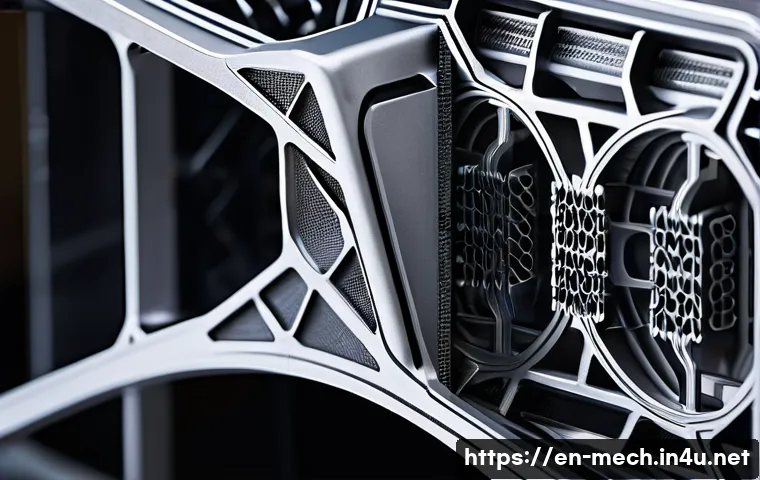
Additive manufacturing has revolutionized mechanical engineering by enabling the creation of complex components with unprecedented precision and efficiency.
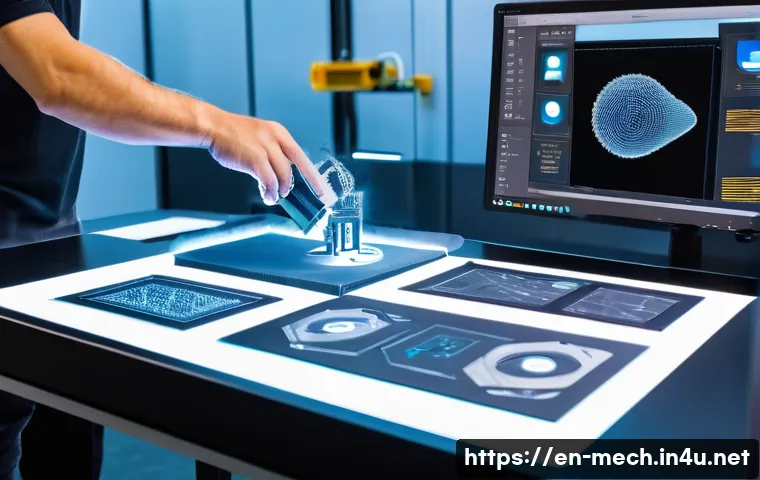
This technology not only reduces material waste but also accelerates the prototyping process, opening new doors for innovation. From aerospace to medical implants, additive manufacturing is reshaping how engineers design and produce parts.
Its ability to customize and rapidly iterate designs offers a competitive edge in today’s fast-paced market. Understanding the fundamentals and potential of this technology is crucial for anyone involved in modern engineering.
Let’s dive deeper and explore the exciting world of additive manufacturing together!
Unlocking Design Freedom with Additive Manufacturing
Complex Geometries Made Simple
One of the most striking advantages of additive manufacturing is its unmatched ability to produce intricate designs that traditional manufacturing methods struggle with.
Unlike subtractive processes, which often require multiple steps and tooling adjustments, additive manufacturing builds components layer by layer directly from digital models.
This means engineers can experiment with organic shapes, lattice structures, and internal channels that enhance functionality without worrying about machining constraints.
Personally, I’ve seen parts with internal cooling channels that would be impossible to machine conventionally but print flawlessly using this technology, offering both weight reduction and thermal management improvements.
Rapid Iteration and Prototyping
Speed is often king in engineering, and additive manufacturing delivers by drastically shortening the prototyping cycle. Instead of waiting weeks for custom tooling or molds, designers can print functional prototypes within hours or days.
This rapid feedback loop encourages creativity and refinement—allowing teams to test multiple versions quickly and incorporate real-world insights early on.
In my experience working alongside product developers, the ability to tweak and produce a new iteration overnight has saved countless hours and avoided costly mistakes downstream.
Customization at Scale
Mass customization used to sound like an oxymoron, but additive manufacturing has flipped that idea on its head. This technology empowers engineers to tailor parts to specific requirements without disrupting production lines.
Whether it’s patient-specific implants in healthcare or bespoke aerospace components optimized for individual missions, the flexibility is game-changing.
I recall a case where a company used additive manufacturing to produce custom-fit prosthetics, drastically improving patient comfort and outcomes—a perfect example of technology meeting real human needs.
Material Innovation and Sustainability Impact
Expanding Material Choices
The palette of materials compatible with additive manufacturing is constantly growing. From thermoplastics and photopolymers to advanced metal alloys like titanium and Inconel, the options support a wide range of mechanical properties and application demands.
What’s exciting is not just variety, but also the development of composite materials that combine strength, heat resistance, and lightweight characteristics.
Working with metal powders myself, I’ve noticed that selecting the right material often makes or breaks the success of a component, especially in highly demanding environments such as aerospace or automotive sectors.
Waste Reduction and Environmental Benefits
Additive manufacturing inherently promotes sustainability by using only the necessary material to build parts, drastically reducing scrap compared to subtractive methods that carve away large chunks from raw blocks.
This lean approach helps companies minimize their environmental footprint and lower material costs simultaneously. From my observations, firms adopting additive manufacturing report significant savings in raw material usage and energy consumption, which also aligns with growing regulatory pressures and consumer demand for greener products.
Recycling and Circular Economy Potential
Another promising angle is the ability to recycle leftover powders and failed prints back into the production cycle. While some degradation occurs, ongoing research is improving powder reuse without compromising quality.
This circular approach enhances resource efficiency and reduces dependency on virgin materials. I find it particularly encouraging how additive manufacturing fits into broader sustainability strategies, helping industries move towards more closed-loop manufacturing systems.
Challenges in Scaling and Integration
Production Speed vs. Volume
While additive manufacturing excels at customization and complexity, it’s not always the fastest for mass production. Layer-by-layer building can be time-consuming compared to high-speed injection molding or stamping for large quantities.
This trade-off means that for extremely high-volume parts, additive manufacturing might serve better as a complementary technology rather than a full replacement.
In my discussions with manufacturing managers, this balance between speed, cost, and flexibility is a constant consideration when deciding which process to apply.
Post-Processing Requirements
Finished prints often require post-processing such as support removal, surface finishing, or heat treatment to achieve the desired mechanical properties and aesthetics.
These additional steps add time and cost, sometimes offsetting the speed benefits of printing. Having worked on projects where post-processing was underestimated, I can attest that planning for these stages early on is crucial for realistic timelines and budgets.
Quality Control and Certification
Ensuring consistent quality across additive manufacturing batches remains a challenge, especially for critical applications like aerospace or medical devices.
Variability in powder quality, machine calibration, and environmental factors can affect part performance. Regulatory bodies are still developing standards specific to additive processes, making certification complex.
From my experience, investing in rigorous testing protocols and traceability systems is essential to build trust with customers and comply with industry standards.
Impact on Aerospace and Automotive Industries
Weight Reduction and Performance Gains
Additive manufacturing’s ability to create lightweight, optimized components is a huge boon for aerospace and automotive sectors where every gram counts.
Engineers can design parts with complex internal structures that reduce weight without sacrificing strength, leading to improved fuel efficiency and performance.
I’ve seen firsthand how parts printed with lattice infills can reduce mass by 30% or more while maintaining structural integrity—a game-changer for aircraft and race cars alike.
Supply Chain Simplification
By producing parts on-demand closer to the point of use, additive manufacturing can streamline supply chains and reduce inventory costs. This localized production model also cuts down lead times and dependency on long logistics routes.
My conversations with supply chain experts reveal that additive manufacturing is increasingly viewed as a strategic tool to enhance resilience, especially in times of disruption like global pandemics or geopolitical tensions.
Tooling and Spare Parts Innovation
Beyond end-use components, additive manufacturing is revolutionizing tooling creation and spare parts supply. Custom jigs, fixtures, and molds can be printed quickly, reducing downtime in production lines.
Additionally, manufacturing spare parts on-demand prevents obsolescence and storage costs. I recall a maintenance team using printed replacement parts for legacy machines that were no longer commercially available, saving both money and operational delays.
Advancements in Software and Design Tools
Generative Design and Simulation
The integration of AI-driven generative design tools with additive manufacturing workflows allows engineers to explore thousands of design permutations optimized for performance, weight, and manufacturability.
This process frees designers from manual iterations and encourages innovative shapes that meet specific constraints. Having tested some of these tools, I can say they dramatically accelerate creativity while ensuring practical feasibility.
Digital Twins and Process Monitoring
Digital twin technology enables real-time monitoring and feedback of additive manufacturing processes, enhancing precision and reducing defects. Sensors embedded in machines collect data on temperature, layer adhesion, and material flow, which helps operators fine-tune parameters on the fly.
From a user perspective, this means fewer failed prints and higher confidence in part quality, which is especially important in regulated industries.
User-Friendly Interfaces and Automation
Software advancements are also making additive manufacturing more accessible to non-experts. Intuitive interfaces, automated support generation, and build orientation optimization help reduce the learning curve and speed up production setup.
I’ve noticed that these improvements encourage smaller businesses and startups to adopt additive manufacturing without the need for extensive training or specialized staff.
Economic Implications and Market Trends
Cost Considerations and ROI
While initial investment in additive manufacturing equipment and materials can be significant, the long-term return on investment often justifies the expense.
Reduced tooling costs, faster time-to-market, and lower inventory overhead contribute to overall savings. In my experience advising companies, it’s critical to evaluate not only direct costs but also indirect benefits like innovation speed and customization capabilities to understand the full economic impact.
Emerging Business Models
Additive manufacturing is fostering new business models such as on-demand production, distributed manufacturing networks, and digital inventory. These approaches reduce capital tied up in physical stock and allow companies to respond quickly to market changes.
From what I’ve seen, some startups are even offering additive manufacturing as a service, democratizing access and driving wider adoption.
Future Growth and Investment Trends
The additive manufacturing market continues to attract substantial investment across sectors, driven by advances in technology and expanding applications.
Analysts predict strong growth fueled by industries like healthcare, aerospace, automotive, and consumer goods. Observing this trend, I believe the technology will become increasingly mainstream as costs decrease and capabilities expand.
Comparative Overview of Additive Manufacturing Techniques
| Technique | Materials | Typical Applications | Advantages | Limitations |
|---|---|---|---|---|
| Fused Deposition Modeling (FDM) | Thermoplastics (ABS, PLA, Nylon) | Prototyping, concept models, low-cost parts | Affordable, easy to use, widely available | Lower resolution, weaker mechanical properties |
| Selective Laser Sintering (SLS) | Polymers, some metals | Functional prototypes, small batch production | No support structures needed, good mechanical strength | Powder handling complexity, surface finish roughness |
| Direct Metal Laser Sintering (DMLS) | Metal alloys (Titanium, Stainless Steel, Inconel) | Aerospace, medical implants, tooling | High precision, strong metal parts | High cost, slow build speed |
| Stereolithography (SLA) | Photopolymers | High-detail prototypes, dental and jewelry models | Excellent surface finish, fine resolution | Brittle parts, limited material strength |
| Binder Jetting | Metals, ceramics, sand | Sand casting molds, metal parts post-processed | Fast printing, large build volumes | Requires post-processing, lower density parts |
Conclusion
Additive manufacturing is revolutionizing design and production by unlocking new possibilities for complexity, customization, and sustainability. Its impact spans multiple industries, offering innovative solutions that were once impossible or cost-prohibitive. As technology advances, embracing additive manufacturing can lead to faster innovation cycles, optimized performance, and more resilient supply chains.
Useful Insights to Remember
1. Additive manufacturing enables the creation of complex geometries that traditional methods cannot easily achieve, enhancing both function and form.
2. Rapid prototyping accelerates product development, allowing for quick iterations and reducing costly errors early in the process.
3. Customization at scale is now feasible, especially for specialized applications like medical implants or aerospace components.
4. Sustainability benefits include significant material waste reduction and opportunities for recycling, aligning with eco-friendly manufacturing goals.
5. Despite its advantages, challenges such as production speed, post-processing, and quality control require careful planning for successful integration.
Key Takeaways
Understanding additive manufacturing’s strengths and limitations is crucial for maximizing its potential. It excels in complexity, customization, and sustainability but may not replace traditional methods for high-volume production. Proper post-processing and quality assurance are essential to meet industry standards. By leveraging advanced software tools and aligning with evolving market demands, businesses can harness additive manufacturing to drive innovation and competitive advantage.
Frequently Asked Questions (FAQ) 📖
Q: What are the main advantages of additive manufacturing compared to traditional manufacturing methods?
A: Additive manufacturing offers several key benefits over traditional methods. It significantly reduces material waste since parts are built layer by layer, using only the necessary material.
This process also enables the creation of highly complex geometries that would be difficult or impossible to achieve with conventional techniques. Additionally, it speeds up prototyping and product development, allowing engineers to test and refine designs quickly.
From my experience, the ability to customize parts on demand and iterate designs rapidly provides a huge advantage in industries where innovation and time-to-market are critical.
Q: In which industries is additive manufacturing most commonly used, and why?
A: Additive manufacturing has found strong footholds in aerospace, medical implants, automotive, and consumer electronics, among others. Aerospace benefits from the technology’s ability to produce lightweight, strong components that reduce fuel consumption.
In the medical field, custom implants and prosthetics tailored to individual patients are now possible, improving outcomes dramatically. Automotive companies use it for rapid prototyping and producing specialized parts, while consumer electronics leverage it to create intricate designs that improve performance and aesthetics.
From what I’ve seen, these industries prioritize precision, customization, and speed, making additive manufacturing a perfect fit.
Q: What are the current limitations or challenges of additive manufacturing that engineers should be aware of?
A: While additive manufacturing is powerful, it does come with some challenges. Material options can be limited compared to traditional manufacturing, especially for metals and high-performance composites.
Surface finish and mechanical properties might require additional post-processing to meet stringent standards. Also, production speed for large volumes is often slower and more costly than mass-production methods like injection molding.
From my hands-on experience, understanding these limitations upfront helps engineers decide when additive manufacturing is the right choice and how to optimize designs for the best results.