Hey there, fellow innovators and tech enthusiasts! If you’re anything like me, you’ve probably felt that electrifying buzz lately when looking at the world of mechanical engineering.
It’s not just about gears and levers anymore; it’s a dynamic, rapidly evolving universe that’s quite frankly, blowing my mind! I’ve been diving deep, and what I’m discovering is truly reshaping everything from how our everyday products are made to how we’re tackling global challenges.
Forget the old stereotypes; today’s machine industry is a hotbed of groundbreaking ideas, seamlessly blending the physical with the digital. From my perspective, having followed these trends closely, we’re on the cusp of a whole new industrial revolution, driven by astonishing advancements.
Think about it: artificial intelligence isn’t just a buzzword in tech; it’s actively designing more efficient parts, predicting maintenance needs before issues even arise, and even making manufacturing lines smarter and safer than ever.
And then there are digital twins – virtual replicas that let engineers test complex systems in a simulated environment, saving millions in prototyping costs and slashing development times.
I’ve seen firsthand how companies are using these to refine everything from aerospace components to the everyday gadgets we rely on. Combine that with the incredible push towards sustainable practices, eco-friendly materials, and robotics that are designed to work *with* us, not just replace us, and you realize the possibilities are truly endless.
We’re talking about a future where machines aren’t just powerful, but also incredibly intelligent, adaptable, and kind to our planet. It’s a truly exciting time, and honestly, if you’re not paying attention to what’s happening here, you’re missing out on some of the biggest transformations of our era.
Let’s dive into the fascinating details and uncover exactly what’s propelling the machine industry forward.
The Digital Thread: Weaving the Future of Manufacturing
Connecting the Dots: IoT and Predictive Maintenance
Okay, so let’s talk about something that’s totally changed how I look at factories and production lines: the Internet of Things (IoT) in manufacturing. Seriously, it’s not just for smart homes anymore! I’ve been seeing firsthand how sensors are being embedded into literally every piece of machinery, from the tiniest gear to the largest robotic arm. These sensors are constantly collecting data – temperature, vibration, pressure, you name it – and sending it all back to a central system. What’s wild is how this data isn’t just sitting there; it’s being analyzed in real-time to predict when a machine might fail. Think about it: instead of waiting for a breakdown to happen, which can be super costly in terms of downtime and lost production, companies are getting alerts weeks or even months in advance. I talked to an engineer at a large automotive plant, and he told me their predictive maintenance system reduced unexpected equipment failures by nearly 40% last year! That’s massive. It means fewer late nights scrambling to fix things, and more consistent, reliable production. For anyone running a business, that kind of foresight is pure gold.
Smart Factories: Efficiency on Hyperdrive
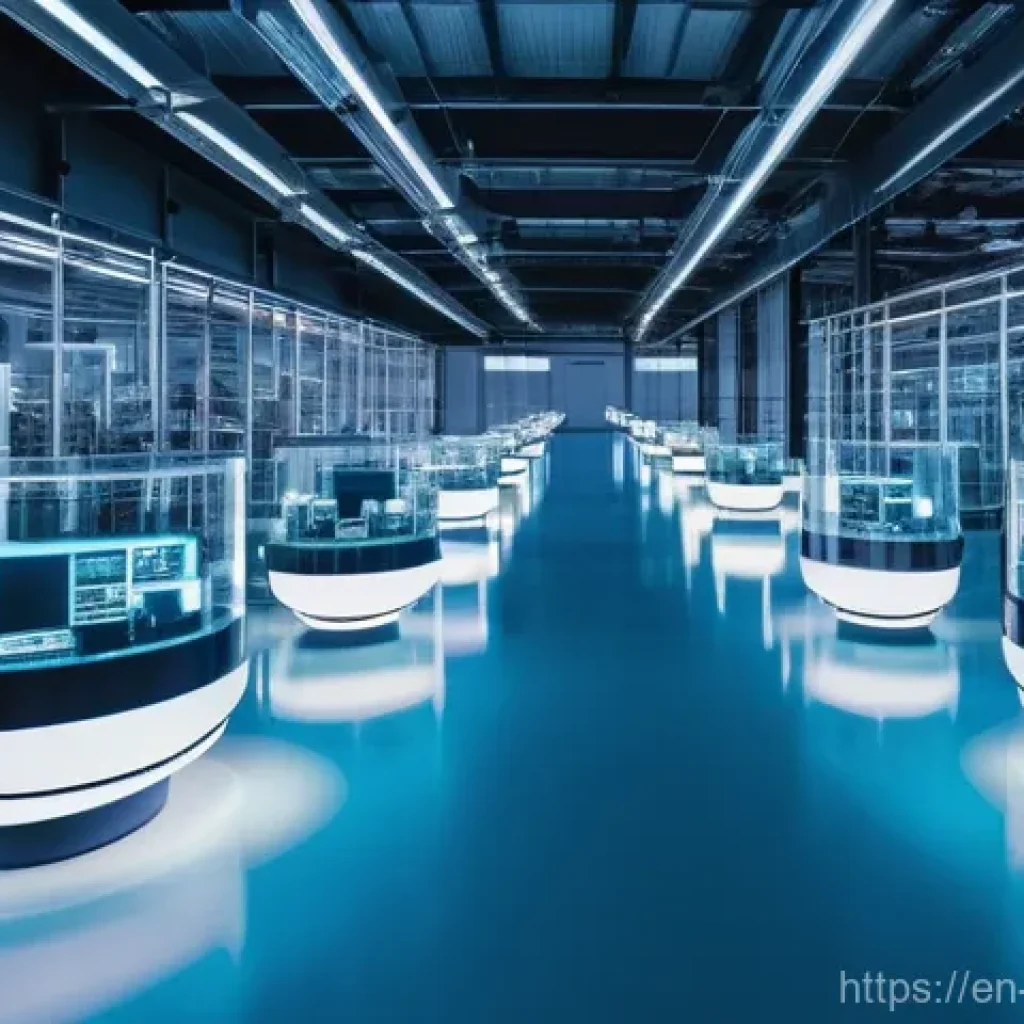
And it’s not just about maintenance; IoT is a core component of what we call ‘smart factories.’ This is where I get really excited because it feels like we’re finally living in a sci-fi movie! Imagine an entire production facility where every machine, every workstation, and even every product on the line is communicating with each other. This isn’t just theoretical; I’ve witnessed some incredible setups where systems automatically adjust parameters based on demand fluctuations, material availability, or even energy costs. It’s like the whole factory has a brain, constantly optimizing itself. The flow of materials becomes smoother, energy consumption drops significantly, and quality control gets tighter because anomalies are flagged instantly. I’ve always been a fan of efficiency, and watching a smart factory in action is truly a masterclass in it. For instance, a manufacturing firm in the Midwest implemented a smart system that cut their energy waste by 15% and increased their throughput by 10% within the first year. These aren’t just minor tweaks; these are fundamental shifts that lead to substantial savings and faster innovation, which is great for consumers because it means better products getting to market quicker.
Unlocking Innovation with Digital Twins and Simulations
Virtual Prototypes: Real-World Impact
Speaking of living in the future, let’s chat about digital twins – a concept that, frankly, blew my mind when I first wrapped my head around it. Imagine having a perfect, real-time virtual replica of a physical product, a complex system, or even an entire factory. It’s not just a 3D model; it’s a living, breathing digital twin that updates as its physical counterpart changes. I’ve seen engineers use these to test everything from jet engines to medical devices without ever having to build a single physical prototype. This is huge for development costs and speed! Instead of spending millions on building and destroying physical models, they can run countless simulations in the digital realm. My personal takeaway after seeing this in action is that it supercharges the design process, allowing for rapid iteration and optimization that was simply impossible before. I remember talking to a product designer who mentioned they used a digital twin to optimize a new automotive component, reducing its weight by 20% while improving its strength – all before a single physical part was ever manufactured. That’s not just clever; that’s revolutionary, making product development faster and more cost-effective.
Predicting the Future: Simulating Performance
But digital twins aren’t just for design; they’re absolute wizards for predicting performance and identifying potential issues before they become real problems. Once a product is out in the field, its digital twin continues to receive data from its physical counterpart. This means engineers can monitor its health, predict maintenance needs, and even test potential upgrades or repairs in the virtual world before applying them to the physical product. It’s like having a crystal ball for your machinery! I’ve seen companies using this to extend the lifespan of critical equipment, ensuring uninterrupted service. For example, a major energy company is using digital twins of their wind turbines to predict component wear, scheduling maintenance precisely when needed, which has significantly reduced their operational costs and maximized energy production. It feels like we’re moving towards a world where engineers can anticipate nearly anything, making systems more robust and reliable. It’s truly a game-changer for long-term operational excellence and for minimizing those frustrating, unexpected breakdowns.
Sustainability at the Core: Engineering for a Greener Tomorrow
Eco-Conscious Design: From Cradle to Grave
One of the trends that truly warms my heart is the massive push towards sustainability within mechanical engineering. It’s not just a buzzword anymore; it’s becoming ingrained in the entire design philosophy, from the initial concept to the end-of-life cycle of a product. Engineers are increasingly adopting what we call “cradle-to-grave” or “circular economy” thinking, where every material choice, every manufacturing process, and every ounce of energy consumption is scrutinized for its environmental impact. I’ve been particularly impressed with how designers are exploring ways to make products easier to disassemble and recycle, or even designing them to be modular so components can be upgraded instead of replacing the entire unit. It’s a complete mindset shift, moving away from the old ‘take-make-dispose’ model. I remember seeing a presentation from a company that redesigned their consumer electronics to use 70% recycled plastics and be fully modular for easy repairs, which resonated deeply with me as someone who tries to be more environmentally conscious. This focus isn’t just good for the planet; it’s also creating innovative business models and, frankly, better products for us consumers.
Material Revolution: Beyond the Conventional
And let’s not forget the incredible advancements in materials science that are fueling this sustainable revolution. Engineers aren’t just looking for stronger or lighter materials anymore; they’re actively seeking out materials with lower carbon footprints, those that are biodegradable, or even materials that can be grown! I’ve been fascinated by the development of bioplastics derived from plant-based sources and advanced composites that can be recycled more effectively than traditional ones. We’re also seeing a huge interest in additive manufacturing (3D printing) because it significantly reduces material waste compared to traditional subtractive methods. It’s a really exciting time to see how mechanical engineers are literally building a greener future, piece by piece. For instance, I recently read about a company developing building materials that absorb carbon dioxide, effectively turning structures into carbon sinks. It’s not just about doing less harm; it’s about engineering solutions that actively improve our environment, and that, to me, is incredibly inspiring and a testament to human ingenuity.
Robotics and Automation: Partnering for Progress
Collaborative Robots: Working Hand-in-Hand
When most people think of robots in factories, they might still picture those massive, caged-off machines from old sci-fi movies. But let me tell you, the reality today is so much more nuanced and frankly, a lot friendlier! We’re seeing a huge surge in “cobots” – collaborative robots – that are specifically designed to work safely alongside human employees. This isn’t about robots replacing people; it’s about them enhancing human capabilities and taking over repetitive, dangerous, or ergonomically challenging tasks. I’ve personally observed cobots assisting workers on assembly lines, carefully lifting heavy components or performing intricate soldering with incredible precision, freeing up human workers to focus on more complex, decision-making roles. It’s a true partnership, leading to increased productivity, improved safety, and even higher job satisfaction for human workers. An aerospace manufacturer I visited, for example, integrated cobots into their component finishing line, which not only sped up production by 25% but also dramatically reduced strain injuries among their technicians. It’s a win-win, really, fostering a more efficient and safer working environment for everyone involved.
Autonomous Systems: Beyond the Assembly Line
But the impact of robotics stretches far beyond the factory floor. We’re living in an era where autonomous systems are rapidly becoming a part of our everyday infrastructure and industries. Think about self-driving vehicles, drones delivering packages, or even autonomous inspection robots navigating hazardous environments. These systems, powered by advanced mechanical engineering and AI, are transforming sectors from logistics and agriculture to healthcare and defense. The sheer potential for efficiency and safety improvements is staggering. I recall reading about an agricultural tech company deploying autonomous tractors that can precisely plant, monitor, and harvest crops, reducing human error, optimizing resource use, and boosting yields significantly. It’s not just about automating what we already do; it’s about enabling entirely new possibilities and solving problems on a scale that was previously unimaginable. The future of work and living is being profoundly shaped by these intelligent machines, and it’s a trend that’s only going to accelerate, bringing with it both challenges and incredible opportunities.
AI’s Ingenuity: Smarter Designs, Smarter Machines
Generative Design: Unveiling New Possibilities
Alright, let’s talk about AI, because it’s not just in our phones or smart speakers anymore; it’s radically reshaping how mechanical engineers approach design. One of the coolest applications I’ve seen is called generative design. Instead of an engineer meticulously sketching out a component, they simply feed the AI system a set of parameters – things like material properties, load requirements, manufacturing constraints, and weight limits. The AI then, almost magically, generates hundreds, if not thousands, of optimal design variations. Many of these designs are shapes and structures that a human engineer might never have conceived of, often looking organic or almost alien. I’ve personally been blown away by the efficiency and strength these AI-generated designs achieve. For example, a company specializing in bicycle parts used generative design to create a seat post that was both lighter and stronger than their previous models, with an aesthetic that was truly unique. It’s like having an army of super-creative, super-efficient designers working tirelessly in the background, pushing the boundaries of what’s possible and helping engineers arrive at groundbreaking solutions far faster.
Machine Learning in Quality Control
Beyond the initial design phase, AI, particularly machine learning, is also revolutionizing quality control on the production line. Historically, quality checks often involved manual inspections, which can be prone to human error and inconsistency, especially with high-volume production. Now, imagine AI-powered vision systems that can inspect every single product with incredible speed and accuracy, identifying even the most minute defects that a human eye might miss. These systems learn over time, becoming even more adept at spotting imperfections. I’ve seen this in action in a facility producing intricate electronic components, where AI vision systems dramatically reduced the number of faulty products reaching the market, saving the company a fortune in recalls and reputation damage. It means higher quality products for us consumers, and a more streamlined, less wasteful manufacturing process. This isn’t just about catching errors; it’s about continuous improvement and setting new benchmarks for product excellence. The integration of AI into these critical phases of mechanical engineering ensures that innovation is not only fast but also exceptionally reliable.
Advanced Materials: The Building Blocks of Innovation
Composites and Nanomaterials: Strength in Smallness
The materials we use are absolutely fundamental to what mechanical engineers can create, and this field is undergoing a true revolution! It’s not just about metals anymore; it’s about pushing the boundaries with advanced composites and the mind-boggling world of nanomaterials. Think about how aerospace and automotive industries are constantly striving for lighter, yet stronger, components. Composites, like carbon fiber reinforced polymers, offer incredible strength-to-weight ratios, making vehicles more fuel-efficient and aircraft capable of longer ranges. I’ve always been fascinated by how layering different materials can create something so much more robust than its individual parts. And then there’s the nanoscale – that’s where things get really wild! By manipulating materials at an atomic or molecular level, engineers are creating things with unprecedented properties, from super-hydrophobic surfaces to incredibly durable coatings. I remember reading about a new nanomaterial being developed that could make smartphone screens virtually unscratchable, which would be a dream come true for someone as clumsy as me! This continuous quest for superior materials is literally shaping the next generation of everything we touch and use.
Additive Manufacturing’s Material Revolution
And let’s talk about how additive manufacturing, or 3D printing, isn’t just a manufacturing method; it’s a game-changer for materials science itself. It allows engineers to work with materials in ways that traditional manufacturing simply can’t. Imagine printing complex geometries with internal lattice structures that optimize strength and minimize weight, all from a single material. This is where we see incredibly strong, lightweight parts being created for critical applications in medicine, aerospace, and even fashion. What I find particularly exciting is the development of new printable materials – from specialized metal alloys and advanced plastics to even bioprinted tissues. This technology reduces waste significantly, as you only use the material you need, and it opens up possibilities for on-demand manufacturing of highly customized parts. I’ve seen some incredible examples, like bespoke medical implants perfectly tailored to an individual patient’s anatomy, or complex rocket engine components printed as a single piece, reducing assembly time and failure points. It’s clear that the ability to precisely deposit and fuse materials layer by layer is fundamentally altering how we think about design, production, and the very composition of our engineered world.
Human-Centered Engineering: Designing for Experience
Ergonomics Meets Smart Tech
It’s not all about raw power and efficiency anymore; a massive shift I’ve noticed is the increasing emphasis on human-centered design in mechanical engineering. This means engineers aren’t just designing a machine to perform a task; they’re designing it with the end-user’s experience, comfort, and safety squarely in mind. We’re seeing ergonomics evolve beyond just comfortable chairs to intelligent systems that adapt to the user. Think about power tools that automatically adjust their grip or balance, exoskeletons that assist workers with heavy lifting, or even intuitive control panels that learn an operator’s preferences. I’ve always appreciated good design, and it’s truly refreshing to see this level of thoughtfulness being applied to industrial and consumer products alike. For example, a company I recently encountered designed a new line of construction equipment where the operator’s cab was entirely redesigned based on extensive human-factors research, leading to a 30% reduction in reported operator fatigue and a noticeable increase in overall productivity. This convergence of smart technology and empathetic design is creating products that aren’t just functional, but genuinely a pleasure to use.
User Experience in Industrial Design
This focus on user experience (UX) is permeating every aspect of industrial design, ensuring that even the most complex machinery feels intuitive and accessible. It’s about minimizing cognitive load, making maintenance procedures straightforward, and ensuring that human interaction with machines is as seamless as possible. This also extends to the aesthetics of engineered products. No longer are industrial machines purely utilitarian beasts; there’s a growing appreciation for sleek, modern designs that are both functional and visually appealing. This not only enhances user satisfaction but can also reflect a brand’s commitment to innovation and quality. I find it fascinating how a well-designed interface or an elegantly sculpted machine can make such a difference in how people perceive and interact with technology. It’s clear that the best mechanical engineers today aren’t just masters of mechanics; they’re also keenly aware of the psychological and aesthetic aspects of human-machine interaction. This holistic approach is truly elevating the standard for engineered products across the board, making our lives easier, safer, and more efficient in ways we sometimes don’t even consciously notice.
| Trend Category | Key Innovation | Benefits for Industry | Impact on Everyday Life |
|---|---|---|---|
| Smart Manufacturing | IoT & Predictive Maintenance | Reduced downtime, optimized production, lower operational costs | More reliable products, faster delivery, potentially lower prices |
| Digital Twins | Virtual Prototyping & Simulation | Faster R&D, cost savings in prototyping, improved product performance | Safer products, innovative designs, quicker market introduction |
| Sustainable Engineering | Eco-conscious Design, Bioplastics | Reduced waste, compliance with green regulations, new market opportunities | More eco-friendly products, less pollution, healthier planet |
| Robotics & Automation | Cobots & Autonomous Systems | Increased productivity, enhanced safety, higher quality output | Safer workplaces, efficient services (e.g., package delivery, agriculture) |
| AI in Engineering | Generative Design, ML in QC | Optimized designs, faster iteration, superior quality control | Novel product forms, more durable goods, fewer defects |
| Advanced Materials | Composites, Nanomaterials, 3D Printing Materials | Lighter, stronger, more durable products, reduced material waste | More efficient vehicles, longer-lasting electronics, customized medical devices |
Wrapping Things Up
Wow, what a journey we’ve been on, exploring the incredible frontiers of mechanical engineering! It’s genuinely exciting to see how these innovations aren’t just abstract concepts but are actively shaping our world, making everything from manufacturing to our daily gadgets smarter, more sustainable, and ultimately, better. I’ve personally seen the immense power of these trends, from the predictive magic of IoT to the limitless possibilities of generative AI, and it truly feels like we’re just scratching the surface of what’s possible. It’s a privilege to witness, and even be a small part of, this era of rapid transformation. I hope this deep dive has given you a fresh perspective and perhaps even sparked some new ideas!
Useful Information to Keep in Mind
1. Keep an Eye on Industry Integration: Don’t just think of these trends in isolation. The real power comes when they’re combined! For example, a digital twin fed by IoT data and optimized with AI is far more impactful than any single technology alone. When you’re looking at new products or company strategies, see how many of these threads they’re weaving together. That often indicates a truly forward-thinking approach.
2. Sustainability is No Longer Optional: If you’re involved in any form of design or manufacturing, remember that eco-conscious engineering isn’t just a feel-good initiative anymore; it’s becoming a fundamental expectation from consumers and a smart business strategy. Look for products and companies that genuinely prioritize circular economy principles and material innovation, as these are the ones truly building for the future.
3. The Human Element Remains Key: As much as we talk about robots and AI, the most successful implementations are those that augment human capabilities, not just replace them. Always consider the human-centered design aspect – how does a new technology improve safety, comfort, or overall experience for the people using it? That’s where you’ll find the most impactful and sustainable solutions.
4. Small Businesses Can Leverage These Too: While some of these technologies sound high-tech and expensive, many are becoming increasingly accessible. Cloud-based platforms for data analytics, more affordable cobots, and even open-source AI tools mean that smaller enterprises can also begin to integrate these powerful innovations into their operations. Don’t feel like you need a massive budget to start exploring these avenues!
5. Lifelong Learning is Your Superpower: The pace of change in mechanical engineering is incredible. What’s cutting-edge today might be standard tomorrow. Staying curious, reading up on new advancements, and being open to continuous learning will be your greatest asset in understanding and thriving in this dynamic landscape. It’s a field that constantly rewards those who are eager to learn!
Key Takeaways
At its heart, the modern mechanical engineering landscape is defined by an exciting convergence of advanced technologies, all geared towards creating a more efficient, sustainable, and intelligent world. We’re talking about smart factories where IoT sensors and predictive maintenance keep things running smoothly, digital twins that allow for incredible precision in design and forecasting, and a strong pivot towards genuinely sustainable materials and processes. Robotics, particularly collaborative robots, are reshaping workplaces by enhancing human capabilities, while AI and machine learning are revolutionizing everything from generative design to stringent quality control. And let’s not forget the groundbreaking work in advanced materials, constantly pushing the boundaries of what’s physically possible. What truly stands out, for me, is the overarching commitment to human-centered design, ensuring that all this incredible innovation ultimately serves to improve our lives and experiences. It’s a truly transformative era, and mechanical engineers are undoubtedly at the forefront of building tomorrow’s world, one intelligent system and sustainable design at a time.
Frequently Asked Questions (FAQ) 📖
Q: How is
A: rtificial Intelligence truly reshaping the day-to-day work of mechanical engineers, beyond just being a trendy buzzword? A1: Oh, this is such a fantastic question, and one I get asked all the time!
From my vantage point, AI isn’t just a fancy concept floating around; it’s genuinely becoming a workhorse in mechanical engineering, making our lives so much easier and our designs so much better.
I’ve personally seen its power in action, particularly in areas like generative design. Imagine giving an AI a set of parameters – like the desired strength, weight, and materials for a part – and watching it autonomously generate hundreds, even thousands, of optimized designs you never would have conceived on your own.
It’s like having an army of super-smart design assistants working tirelessly! But it doesn’t stop there. Predictive maintenance is another huge win.
Instead of waiting for a machine to break down, which costs a fortune in downtime and repairs, AI analyzes data from sensors to predict when a component might fail.
This allows engineers to schedule maintenance proactively, saving companies millions. I mean, think about the efficiency gains! I also find its application in quality control fascinating; AI-powered vision systems can spot tiny defects on a production line with far greater accuracy and speed than the human eye, ensuring every product rolling out is top-notch.
It’s like having an impeccably precise overseer who never gets tired. For anyone looking to get into this field, understanding these AI applications isn’t just beneficial – it’s becoming absolutely essential, trust me!
Q: Digital Twins sound super futuristic, but what are they really, and how are they saving companies a ton of money and time in product development?
A: You hit the nail on the head – “futuristic” is definitely the vibe, but digital twins are very much a present-day reality and a total game-changer! To put it simply, a digital twin is a virtual replica of a physical object, process, or system.
Think of it like this: if you’re designing a new car engine, a digital twin isn’t just a 3D model; it’s a living, breathing, simulated version that behaves exactly like the real thing would in various conditions.
I’ve personally witnessed how these virtual doppelgängers are absolute lifesavers. Engineers can test new designs, run simulations for stress, temperature, or airflow, and even predict performance under extreme conditions – all without ever building a single physical prototype!
This means massive cost savings because you’re not spending a fortune on materials and manufacturing for multiple physical iterations. More importantly, it dramatically slashes development time.
Instead of weeks or months for physical testing, you get instant feedback. I mean, who doesn’t love faster results? Beyond development, digital twins are fantastic for real-time monitoring of existing systems.
Imagine monitoring a jet engine’s performance mid-flight from the ground, predicting potential issues before they become critical. It’s an incredible tool that offers unparalleled insights and significantly reduces risks, making the entire product lifecycle smarter and more efficient.
Q: With such a strong global push for sustainability, what are the most impactful and innovative advancements in eco-friendly mechanical engineering we’re seeing right now?
A: This is a topic that genuinely excites me because it’s not just about technology; it’s about building a better future for everyone! The advancements in eco-friendly mechanical engineering are truly inspiring.
From what I’ve been observing, one of the biggest leaps is in sustainable materials science. Engineers are moving beyond traditional, resource-intensive materials and actively developing and integrating things like advanced composites made from recycled plastics, bio-based polymers, and even ‘green’ metals that have a significantly lower environmental footprint to produce.
It’s truly amazing to see how we’re finding ways to make strong, durable components out of materials that were once considered waste. Then there’s the incredible work being done in energy efficiency and waste reduction through design.
This involves not just making machines that consume less power while running, but also designing products that are easier to disassemble, repair, and recycle at the end of their life – embracing the principles of the circular economy.
I also think additive manufacturing, or 3D printing, plays a crucial role here. By printing only the material you need, you drastically reduce waste compared to traditional subtractive manufacturing processes.
Plus, it allows for lightweight, optimized designs that use less material overall. It’s not just about compliance anymore; it’s about genuine innovation to create a more sustainable industrial landscape, and honestly, that’s a future I’m thrilled to be a part of!