
The integration of Machine Learning and Automation into Mechanical Engineering isn’t just a buzzword; it’s a profound shift that’s redefining how we design, build, and maintain everything around us.
From the smallest components to massive industrial systems, AI and smart automation are no longer just concepts for science fiction – they’re tools I’ve personally seen revolutionize efficiency and push the boundaries of innovation.
Think about it: the industry is grappling with demands for simultaneously meeting performance, sustainability, and cost-reduction goals. What was once a painstaking process of manual trial-and-error, or incredibly time-consuming simulations, is now being supercharged by intelligent algorithms.
We’re talking about AI-driven generative design that can explore thousands of optimized configurations in minutes, radically accelerating prototyping and ensuring more efficient, durable products from the get-go.
And for those of us who dread unexpected equipment breakdowns, predictive maintenance, powered by machine learning, is a game-changer, using real-time sensor data to forecast failures and slash downtime.
It’s truly incredible to see how these advancements are not just theoretical, but are being actively deployed, enhancing everything from energy efficiency in HVAC systems to the creation of new, advanced materials.
If you’re as fascinated as I am by how our physical world is getting smarter, you’re in for a treat. Let’s explore this exciting future, and how you can be a part of it, right now.
Revolutionizing Design: Generative AI and My “Aha!” Moments
From Blueprints to Breakthroughs: The Generative Design Paradigm
If you’re anything like me, you’ve spent countless hours meticulously refining designs, tweaking every last parameter to squeeze out that extra ounce of performance or durability.
It’s a painstaking process, often feeling like you’re searching for a needle in a haystack of possibilities. That’s why when I first encountered generative design, my jaw literally dropped.
This isn’t just fancy CAD software; it’s a paradigm shift. Imagine feeding an AI your design constraints – material properties, load conditions, manufacturing methods, even weight targets – and it doesn’t just iterate, it *generates* thousands of viable, often unconventional, solutions that no human engineer would likely conceive on their own.
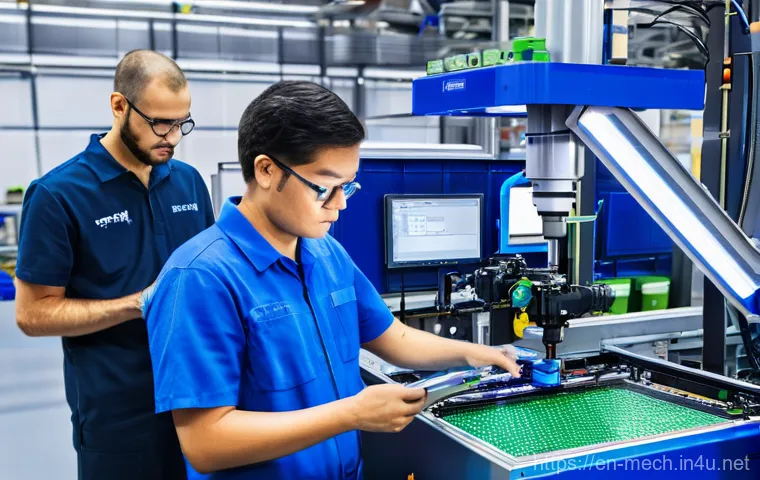
I’ve personally seen projects where a component, traditionally designed over weeks, was optimized by AI in a matter of hours, leading to designs that were lighter, stronger, and more efficient.
It’s like having an army of brilliant design engineers working around the clock, exploring every possible permutation. The sheer speed and innovation this unlocks are truly mind-boggling, accelerating prototyping and getting products to market faster than ever before.
It’s not about replacing the engineer, but empowering us to reach new heights of creativity and efficiency, allowing us to focus on the big picture rather than the minute details of iteration.
The Human Touch in Algorithmic Creation
Now, don’t get me wrong, it’s not just about letting the machines run wild. My experience has shown that the true magic happens when human intuition meets algorithmic power.
The AI might generate a stunningly efficient part, but it still takes a skilled engineer to interpret those results, to understand the manufacturing realities, and to inject that crucial layer of real-world knowledge and aesthetic appeal.
I often tell folks it’s like having a brilliant assistant who presents you with a treasure trove of options; your job is to pick the best one and polish it.
You’re still the conductor of this orchestra, ensuring that the final output aligns not just with performance metrics but also with market demands and user experience.
We’re moving from drawing lines on a screen to guiding intelligent systems, defining the problems, and evaluating the creative solutions they propose.
This collaboration has personally given me back so much time that I used to spend on repetitive tasks, freeing me up to tackle more complex, strategic challenges that genuinely require human-level problem-solving and critical thinking.
It’s an exciting time to be an engineer, feeling more like an innovator than ever before.
Predictive Maintenance: Saying Goodbye to Unexpected Downtime
Real-time Insights: My Experience with Smart Sensors
There’s nothing quite like the stomach-churning feeling of a critical piece of machinery unexpectedly breaking down. It costs money, time, and reputation.
For years, maintenance was largely reactive or time-based – fix it when it breaks, or replace it every X hours whether it needed it or not. Both approaches are inefficient and costly.
Enter predictive maintenance, powered by machine learning, and honestly, it’s been a game-changer in every facility I’ve seen it implemented. Imagine sensors embedded in your equipment, constantly monitoring vibrations, temperature, pressure, and even acoustic signatures.
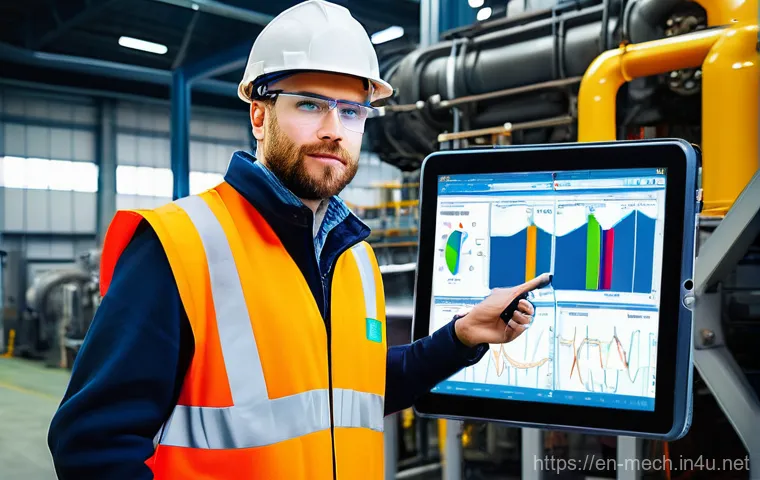
These aren’t just sending raw data; they’re feeding sophisticated AI models that can detect subtle anomalies, patterns that signal an impending failure long before any human could notice it.
I remember a project where we deployed these systems on a crucial manufacturing line. Within weeks, the AI flagged an unusual vibration pattern in a motor bearing.
Our team investigated and found the bearing was indeed showing early signs of wear, allowing us to schedule a replacement during a planned downtime, avoiding what would have been a catastrophic, unpredicted shutdown and saving the company hundreds of thousands of dollars in lost production and emergency repairs.
That feeling of proactively preventing a problem rather than scrambling to fix one? Pure gold.
The Cost-Saving Magic of Anticipation
The economic benefits of predictive maintenance are truly staggering, and it’s not just about avoiding catastrophic failures. Think about it: traditional preventative maintenance involves replacing parts on a fixed schedule, even if they still have plenty of life left.
This leads to wasted resources and unnecessary expenditure on new components and labor. With a predictive approach, you replace parts *only* when they’re actually showing signs of degradation.
This optimization of resource allocation is a huge win for the bottom line. Beyond that, the extended lifespan of machinery, reduced operational costs, and improved safety records all contribute to a significantly healthier financial picture.
From my perspective, implementing these systems is less of an expense and more of a strategic investment that pays dividends almost immediately. It’s like having a crystal ball for your machinery, giving you the power to anticipate and act rather than simply react.
For businesses looking to trim fat and maximize uptime in today’s competitive landscape, predictive maintenance isn’t just an option; it’s rapidly becoming a non-negotiable standard.
The peace of mind alone, knowing your critical assets are under constant intelligent surveillance, is worth its weight in gold.
Robotics Aren’t Just for Factories Anymore: Collaborative Automation
Working Side-by-Side: COBOTs in Action
When most people hear “robots,” they still picture massive, caged-off industrial arms welding car parts. And while those are still very much a part of the manufacturing landscape, the real excitement for me, and where I’ve seen incredible innovation, is in the rise of collaborative robots, or COBOTs.
These aren’t the beasts of old; they’re smaller, smarter, and designed to work safely alongside human operators without extensive caging. I’ve had the chance to work with COBOTs that assist workers with repetitive tasks like picking and placing components, or even holding heavy parts during assembly, freeing up the human to focus on more complex, dexterous, or cognitive challenges.
It’s not about replacing humans; it’s about augmenting our capabilities. One of my favorite examples was seeing a COBOT handle the monotonous task of applying sealant to intricate parts, a job that often led to repetitive strain injuries for human workers.
The human then focused on quality inspection and final assembly, a much more engaging and value-added role. The interaction felt natural, almost like a well-coordinated dance, and the productivity boost was noticeable.
Beyond Assembly Lines: New Frontiers for Automation
The applications for robotics, particularly COBOTs and more advanced autonomous systems, are exploding beyond the traditional assembly line. I’m seeing them in logistics, autonomously moving goods around warehouses, drastically improving efficiency and reducing manual labor.
They’re making their way into agriculture, performing precise planting and harvesting tasks that minimize waste. Even in healthcare, surgical robots assist doctors with incredible precision, and robotic assistants are helping with mundane tasks, allowing nurses to focus on patient care.
This evolution means mechanical engineers are no longer just designing the robots themselves but also the complex ecosystems they operate within – the grippers, the end-effectors, the safety systems, and the data feedback loops that allow these robots to learn and adapt.
The human-robot interaction is becoming a critical design consideration, ensuring these machines are not just efficient but also intuitive and safe for their human colleagues.
It’s a field brimming with opportunities, challenging us to think about how mechanical systems can intelligently interact with and enhance our daily lives in ways we never thought possible.
Smart Materials and Additive Manufacturing: Engineering the Impossible
3D Printing on Steroids: What I’m Seeing Now
Forget everything you thought you knew about 3D printing, or additive manufacturing as we call it in the industry. It’s no longer just for prototypes or hobbyists printing plastic trinkets.
We’re talking about sophisticated metal printing, ceramic printing, and even multi-material printing that allows for functionally graded structures. I’ve personally witnessed the creation of aircraft components that are lighter and stronger than their traditionally manufactured counterparts, thanks to optimized internal lattice structures that could never be cast or machined.
It’s like having ultimate freedom in design; if you can dream it, you can potentially print it. This capability is pushing the boundaries of mechanical engineering, allowing us to create parts with integrated sensors, internal cooling channels, or incredibly complex geometries that enhance performance in ways previously unattainable.
The ability to produce highly customized parts on demand, reducing waste and lead times, is truly transforming supply chains and opening up possibilities for entirely new product categories.
It’s a bit like playing with LEGOs, but your LEGOs can be made of titanium and can do anything you design them to do.
Materials That Think: The Next Generation of Components
Beyond just printing complex shapes, the materials themselves are getting smarter. We’re talking about “smart materials” that can sense their environment and react to it.
Imagine materials that can self-heal after minor damage, or components that change their properties (like stiffness or conductivity) in response to temperature or electrical signals.
I’ve been fascinated by research into shape memory alloys that can return to a pre-defined shape after being deformed, opening up possibilities for incredibly compact actuators or deployment mechanisms.
Then there are self-sensing composites that can detect cracks or stress points within their own structure, providing real-time health monitoring without external sensors.
The mechanical engineer’s role here is evolving; it’s not just about selecting off-the-shelf materials but understanding how to design with and program these intelligent substances.
This means designing structures that leverage these material properties for unprecedented functionality, durability, and adaptability. The marriage of advanced manufacturing techniques with these intelligent materials is truly giving us the tools to engineer the impossible, creating systems that are not just robust but also adaptive and resilient.
Optimizing for a Greener Tomorrow: AI in Sustainable Engineering
Cutting Energy Waste: Real-World Impact
As an engineer, I’m constantly aware of the environmental footprint of our creations, and that’s why I’m so excited about the role AI and automation are playing in sustainable mechanical engineering.
One of the biggest wins I’ve seen is in optimizing energy consumption. Think about industrial HVAC systems, complex manufacturing processes, or even the design of vehicle powertrains.
These systems often have thousands of variables that impact energy use. Manually optimizing them is a monumental task, often leading to compromises. However, machine learning algorithms can analyze vast datasets from these systems, identify inefficiencies, and suggest or even automatically implement optimal operational parameters.
I worked on a project where AI-driven controls for a large commercial building’s HVAC system reduced its energy consumption by over 20% within months, simply by intelligently predicting occupancy and weather patterns to adjust heating and cooling.
That’s a tangible impact on both the planet and the operating budget, proving that going green doesn’t have to mean sacrificing profitability. It’s about being smarter, and AI gives us that intelligence.
Designing with the Planet in Mind: A Personal Passion
Beyond operational efficiency, AI is fundamentally changing how we design products with sustainability in mind from the very beginning. Generative design, which I mentioned earlier, isn’t just about performance; it can also be directed to minimize material usage, reducing waste during manufacturing and throughout a product’s lifecycle.
Life cycle assessment (LCA) software, augmented by AI, can quickly evaluate the environmental impact of different material choices and manufacturing processes, guiding engineers toward more sustainable alternatives.
It allows us to make informed decisions much earlier in the design phase, rather than trying to mitigate environmental damage later. For me, personally, this is incredibly fulfilling.
Knowing that the tools we’re developing and the designs we’re creating are contributing to a more sustainable future is a huge motivator. It’s no longer an afterthought; it’s an integral part of the engineering challenge.
From optimizing aerodynamics for fuel efficiency in electric vehicles to designing easily recyclable components, AI is empowering us to build a future where technological advancement and environmental stewardship go hand-in-hand.
| Aspect of Mechanical Engineering | Traditional Approach | AI/ML & Automation Impact |
|---|---|---|
| Design & Optimization | Manual iterations, limited design exploration, long cycles | Generative design explores thousands of optimal solutions, rapid prototyping, enhanced performance |
| Maintenance | Reactive (fix-when-break) or time-based preventative maintenance | Predictive maintenance using sensor data, anticipating failures, optimized repair schedules, reduced downtime |
| Manufacturing | Fixed assembly lines, human-intensive tasks, rigid processes | Collaborative robots (COBOTs) assisting humans, flexible manufacturing, increased precision, automation of repetitive tasks |
| Material Development | Trial-and-error, empirical testing, slow innovation cycles | AI-driven material discovery, smart materials with adaptive properties, optimized material selection for specific applications |
| Energy Efficiency | Manual adjustments, rule-based control, limited optimization | AI-powered system optimization, real-time energy management, significant reductions in consumption, sustainable design choices |
The Engineer’s New Toolkit: Skills for the AI Era
Beyond the Wrench: Embracing Data and Algorithms
For decades, the mechanical engineer’s toolkit was synonymous with CAD software, stress analysis programs, and, of course, a healthy understanding of physics and materials science.
While those foundational elements remain absolutely critical, the rise of machine learning and automation means our toolkit is expanding in exciting new directions.
It’s no longer enough to just understand how a gear mesh works; we now need to grasp how data from sensors can predict its failure, or how an algorithm can optimize its geometry for a 30% weight reduction.
I’ve found that developing a basic understanding of data science principles, even just how to interpret algorithmic outputs and frame problems for AI to solve, is becoming incredibly valuable.
It’s not about becoming a full-blown data scientist, but about being fluent in the language of data. We’re moving from purely physical problem-solving to integrating computational intelligence into our mechanical designs and processes.
This shift empowers us to tackle challenges of complexity and scale that were previously unimaginable, truly broadening the scope of what a mechanical engineer can achieve.
Continuous Learning: My Secret to Staying Relevant
Let me be honest: this rapid evolution can feel a little intimidating sometimes. New technologies emerge almost daily, and it’s easy to feel like you’re constantly playing catch-up.
But here’s my secret to not just surviving, but thriving: continuous learning. The days of getting your degree and being “done” with learning are long gone.
For me, that means regularly diving into online courses, attending webinars, reading research papers (even the dense ones!), and experimenting with new software tools.
It’s not just about formal education either; it’s about cultivating a curious mindset and embracing new challenges. I’ve personally found immense value in exploring open-source AI libraries and trying to apply them to small, personal engineering problems.
This hands-on experience, even if it’s just a pet project in your garage, builds confidence and practical skills that you won’t get from just reading about it.
The mechanical engineering landscape is undoubtedly changing, but with that change comes an incredible opportunity for those willing to adapt and learn.
The future belongs to the engineers who are not afraid to evolve, to blend traditional mechanical principles with the power of intelligent systems, and to continue pushing the boundaries of what’s possible.
Wrapping Things Up
As we’ve journeyed through the incredible advancements in mechanical engineering, powered by AI and automation, it’s clear we’re standing at the precipice of a new industrial revolution.
It’s a truly exhilarating time to be an engineer, where the impossible is becoming not just possible, but practical. The synergy between human ingenuity and intelligent systems is unlocking unprecedented levels of innovation, efficiency, and sustainability across every sector.
Embracing these tools isn’t just about staying competitive; it’s about shaping a future where our creations are smarter, more resilient, and inherently more beneficial to humanity and our planet.
The best part? This is just the beginning of what we can achieve when we blend our mechanical prowess with the power of intelligent automation.
Useful Information to Keep in Mind
1. Embrace Continuous Learning in AI and ML: The pace of technological change is relentless, especially in AI and machine learning. Don’t view learning as a one-time event, but rather a continuous journey. Dedicate time each week to exploring new concepts, whether through online courses, industry webinars, or even just tinkering with open-source tools. I’ve found that even a basic understanding of how these algorithms function and how to interpret their outputs can make you an incredibly valuable asset in any engineering team. It’s about cultivating a growth mindset, understanding that your current knowledge is a foundation, not a ceiling, and being excited about the next wave of innovation.
2. Focus on the “Why” Behind AI Implementations: When integrating AI or automation into a mechanical system, always start with the problem you’re trying to solve. Is it to reduce downtime, optimize material usage, or enhance safety? Understanding the core objective helps you define clear metrics for success and ensures that the technology serves a genuine purpose, rather than being a solution looking for a problem. My own experience has shown that the most impactful projects are those where the AI directly addresses a critical pain point, leading to tangible improvements that resonate deeply with stakeholders and end-users. It’s not about the tech, it’s about the benefit.
3. Cultivate Human-AI Collaboration Skills: The future of mechanical engineering isn’t about humans vs. machines; it’s about humans *with* machines. Learning to effectively collaborate with AI-powered tools is a crucial skill. This means understanding how to frame problems for generative design, interpret predictive maintenance alerts, and guide collaborative robots safely and efficiently. It requires a shift in mindset from direct control to intelligent oversight and strategic input. I’ve personally seen teams thrive when engineers view AI as a powerful assistant, freeing them from repetitive tasks to focus on higher-level problem-solving, creativity, and the nuanced human elements of design and operation.
4. Understand Data and Its Quality: At the heart of most AI and automation systems is data. High-quality data is paramount for these systems to perform effectively. As mechanical engineers, we’re often the ones generating this data through sensors, simulations, and testing. It’s vital to understand the importance of data integrity, proper sensor calibration, and intelligent data collection strategies. Garbage in, garbage out, as they say! Developing an appreciation for data quality and the basics of data management will ensure that the intelligent systems you deploy are making decisions based on accurate, reliable information, leading to more robust and trustworthy mechanical solutions.
5. Prioritize Ethical and Responsible Engineering: As our tools become more powerful, the ethical considerations become more pronounced. Whether it’s ensuring the safety of collaborative robots working alongside humans, designing AI systems that don’t perpetuate biases, or considering the environmental impact of new materials and manufacturing processes, responsible engineering is more critical than ever. It’s about thinking beyond the immediate performance metrics and considering the broader societal and environmental implications of our work. For me, personally, this means actively questioning and critically evaluating the potential downstream effects of our innovations, striving to create solutions that are not only efficient and effective but also equitable and sustainable for everyone.
Key Takeaways
The landscape of mechanical engineering is being reshaped by AI and automation, leading to unprecedented opportunities for innovation and efficiency. From generative design creating optimized components to predictive maintenance preventing costly downtime, these technologies are empowering engineers to achieve more.
The future calls for a blend of traditional mechanical expertise with data literacy and a collaborative approach to intelligent systems, ensuring we design for a smarter, more sustainable world.
Frequently Asked Questions (FAQ) 📖
Q: What’s the biggest game-changer machine learning and automation bring to mechanical engineering?
A: Oh, this is a question I get all the time, and honestly, it’s the shift from reactive to proactive problem-solving that really blows me away. Traditionally, we’d design, build, test, and then fix issues as they popped up.
It was a cycle of trial-and-error, often costly and time-consuming. But now, with AI and ML, we’re seeing systems predict failures before they happen, or generative design tools optimize solutions before a single prototype is even built.
I’ve personally witnessed projects where predictive maintenance, fueled by real-time sensor data, has slashed downtime by incredible margins, saving companies millions.
It’s like having a crystal ball for your machinery! This proactive approach saves resources, cuts costs, and ultimately leads to far more reliable and efficient products.
It’s not just a small improvement; it’s a fundamental rethinking of how we engineer.
Q: You mentioned generative design and predictive maintenance. Can you give me a more concrete example of how these make a real difference?
A: Absolutely! Let’s talk about something we all use: HVAC systems. For generative design, imagine trying to create the most energy-efficient fan blade or heat exchanger.
Traditionally, engineers would design a few options, simulate them, tweak, and repeat. It could take weeks, right? With AI-driven generative design, an algorithm can explore literally thousands of potential geometries based on your performance criteria – airflow, noise, material, cost – in mere minutes.
I’ve seen designs emerge that are far more efficient than anything a human engineer might conceive through traditional methods. As for predictive maintenance, think about a factory conveyor belt.
Instead of waiting for it to break down, halting production, sensors collect data on vibrations, temperature, motor load. Machine learning models analyze this data and can tell you, “Hey, this bearing is showing signs of imminent failure; replace it next Tuesday during scheduled maintenance.” It’s incredible how it turns unexpected, costly failures into planned, minor interventions.
That’s real-world impact you can feel in your wallet and on your production floor.
Q: This all sounds pretty advanced. Do I need to be an expert in
A: I or coding to get involved or benefit from these trends? A3: That’s a fantastic question, and it’s a common misconception that you need to be a coding guru to tap into this!
While a deep understanding of AI principles is valuable, many of the tools and platforms emerging today are designed with accessibility in mind. Think of it less as building AI from scratch and more like leveraging intelligent tools.
For mechanical engineers, it often means learning how to effectively use these AI-powered platforms – understanding the inputs they need, how to interpret their outputs, and how to integrate them into your existing design or maintenance workflows.
I’ve found that even folks with strong traditional mechanical engineering backgrounds can quickly adapt and become incredibly proficient. Companies are building user-friendly interfaces, and the focus is shifting to how engineers can apply these powerful capabilities without necessarily needing to write complex algorithms themselves.
So, no, you don’t need to be a full-stack AI developer; you need to be curious and open to new ways of working, and that’s something many mechanical engineers already excel at!