Ever feel like the world of mechanical engineering is moving at warp speed? I certainly do! It feels like just yesterday we were marveling at advanced CAD software, and now?
We’re living in an era where AI is practically designing our next-generation equipment, seamlessly integrating complex systems with a level of precision that still blows my mind.
Seriously, who would have thought we’d be seeing machines that not only build but also learn and predict their own maintenance needs before we even notice a hiccup?
It’s not just about pushing boundaries with incredible new technologies like generative design and digital twins, which are truly game-changers for optimizing performance and slashing development times.
What really excites me is how all of this innovation is driving us towards a more sustainable future. From eco-friendly materials that practically heal themselves to designing systems that drastically cut energy consumption, mechanical equipment design isn’t just about efficiency anymore; it’s about making a genuine positive impact on our planet.
I’ve personally seen how these shifts are opening up entirely new avenues for creativity and problem-solving, making it an incredibly vibrant field to be a part of right now.
So, if you’re curious about how these groundbreaking advancements are shaping everything around us, and what’s coming next, you’re in the right place.
Let’s delve into the fascinating evolution of mechanical equipment design right below!
From Drafting Boards to Digital Dreams: The CAD Revolution

Oh, if you could only see the dusty old drafting tables I started on! It feels like a lifetime ago, meticulously sketching every line, every curve, with a steady hand and an eagle eye.
Honestly, the amount of time we spent just getting the dimensions right, let alone visualizing how parts would fit together, was staggering. I remember late nights fueled by coffee, hunched over blueprints, erasing and redrawing until my eyes blurred.
Then came the glorious dawn of Computer-Aided Design (CAD), and it was like someone flipped a switch, illuminating an entirely new world. Suddenly, those flat, two-dimensional drawings transformed into vibrant, interactive 3D models right before my eyes.
It wasn’t just a convenience; it was a revolution that fundamentally reshaped how we approached every single design challenge. The ability to manipulate, rotate, and stress-test virtual components gave us a superpower we never knew we needed.
I vividly recall the sheer exhilaration of creating my first complex assembly in CAD, seeing all the gears mesh perfectly on screen – a moment that still gives me goosebumps today.
This shift not only accelerated the design process exponentially but also dramatically reduced costly errors, saving countless hours and significant budget previously lost to physical prototypes that just didn’t quite work out.
It opened the floodgates for innovation, allowing engineers to experiment with intricate geometries and functionalities that would have been nightmares to produce manually.
The iterative design process became agile and dynamic, fostering a culture of continuous improvement and creative exploration that was simply impossible in the era of pencil and paper.
The Early Days of Digital Design
When CAD first broke onto the scene, it felt like magic, even though the initial interfaces were… let’s just say, a bit clunky by today’s standards. I remember painstakingly learning every command, every shortcut, feeling like I was deciphering an ancient text.
But the payoff was immediate and profound. Suddenly, collaboration became so much easier; we could share files across teams, make real-time adjustments, and visualize concepts without needing everyone in the same room with a giant blueprint spread out.
This was especially critical for global teams, transforming bottlenecks into streamlined workflows. It wasn’t just about drawing faster; it was about designing smarter, with an unprecedented level of precision and control.
My early experiences with CAD taught me the value of digital dexterity, a skill that has only grown more essential over the years. We could zoom in on the tiniest details, check for interferences, and even run basic simulations that gave us a sneak peek into performance long before any material was cut.
This foresight alone was a game-changer, allowing us to catch potential issues early on, saving both time and materials.
My First Encounters with 3D Modeling
Honestly, moving from 2D drafting to 3D modeling was like transitioning from still photographs to a full-motion movie. The ability to visualize components in three dimensions, to “walk through” an assembly virtually, was utterly mind-blowing.
I still remember the first time I rendered a complex part with realistic textures and lighting – it felt like holding the physical object in my hands.
This wasn’t just cool; it was incredibly practical. It helped us communicate designs much more effectively to non-engineers, to clients, and even to manufacturing teams.
No more confusing sketches or ambiguous notes; the model spoke for itself. This immersive experience allowed me to catch design flaws that would have been invisible in 2D, like subtle interference issues or ergonomic problems that only became apparent when viewed from multiple angles.
It truly elevated the design process from a technical drawing exercise to a holistic creative endeavor, fostering a deeper understanding of the product’s form, fit, and function.
The confidence that came from knowing a design was solid, thanks to meticulous 3D modeling, was invaluable.
Beyond Blueprints: Generative Design and AI’s Masterpiece
Fast forward to today, and we’re not just drawing with computers; we’re collaborating with them in ways I never imagined possible. Generative design, powered by artificial intelligence, is the next frontier, and it’s absolutely thrilling to witness.
Instead of me dictating every single line and curve, I now feed the AI my performance requirements, material constraints, and manufacturing processes, and it spits out a plethora of optimized design solutions.
And I mean *optimized*! These aren’t just minor tweaks to existing designs; these are often radically new, organic forms that human engineers might never conceive.
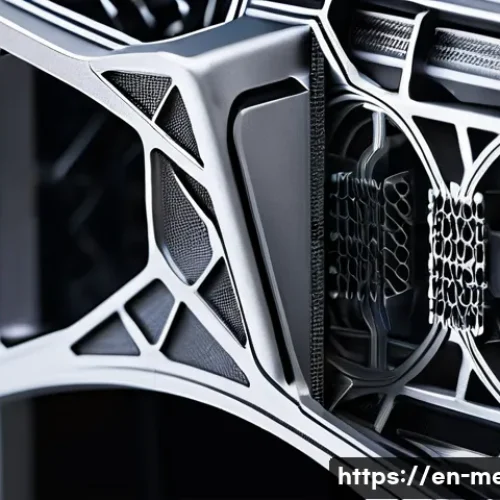
My first exposure to a generatively designed part left me speechless. It was an aerospace bracket, designed for maximum strength with minimal material, and it looked like something alien, almost sculpted by nature itself.
The intricate lattice structures, the flowing contours – it was a testament to what happens when you unleash computing power on a design problem with a clear set of objectives.
It’s like having an army of highly intelligent, tireless designers working around the clock, exploring every conceivable possibility to find the absolute best solution.
This technology isn’t just making parts lighter and stronger; it’s pushing the boundaries of what’s physically achievable, making us rethink our entire approach to form and function.
I’ve personally seen how it cuts down development time drastically, allowing us to bring innovative products to market faster and with greater confidence.
It truly feels like we’re moving from a prescriptive design approach to a truly collaborative, exploratory one.
Letting AI Lead the Way
It’s a strange but wonderful feeling to essentially hand over the reins to an algorithm and watch it work its magic. We, as engineers, define the problem – the loads, the stresses, the desired weight, the available manufacturing methods – and the AI generates thousands, sometimes millions, of potential solutions.
What’s fascinating is how it often discovers non-intuitive solutions that are far more efficient than anything a human could traditionally design. I’ve seen it propose incredibly lightweight structures for aerospace components or fantastically efficient cooling channels for electronics that defy conventional wisdom.
It’s not about replacing human ingenuity, but rather augmenting it, pushing us to think beyond our ingrained biases and conventional design patterns. This frees up my creative energy to focus on the higher-level aspects of a project, the overall system integration, and the human element of the design, rather than getting bogged down in iterating through minute structural optimizations.
It’s like having a brilliant design partner who never sleeps and has an encyclopedic knowledge of material science and physics.
The Unexpected Beauty of Optimized Forms
One of the most surprising aspects of generative design is the aesthetic quality of the results. Often, the forms created by AI are incredibly organic, almost biological, reflecting nature’s own optimized structures.
They might look strange at first glance, but there’s an inherent beauty in their efficiency and purpose. I’ve seen car parts that look like elegant sculptures, or medical implants with intricate lattice designs that promote bone growth, all borne from a purely functional optimization process.
It challenges our traditional notions of what “good design” looks like, pushing us to appreciate form that truly follows function in the most absolute sense.
It’s not about making things pretty for the sake of it, but about the inherent elegance that emerges from perfect optimization. This blend of cutting-edge engineering and unexpected artistry is genuinely captivating, and it’s transforming industries from automotive to medical devices, allowing for breakthroughs in performance that were once considered impossible.
The Rise of Digital Twins: Predicting Performance Before Production
If generative design is about creating the best possible physical object, then digital twins are about making sure that object performs flawlessly throughout its entire lifecycle.
This concept, frankly, blows my mind every single time I delve into it. Imagine having a living, breathing virtual replica of a physical asset – a pump, an engine, an entire factory – that updates in real-time with data from its real-world counterpart.
My experience with digital twins has shown me they are not just static models; they are dynamic, intelligent entities that can predict maintenance needs, simulate operational scenarios, and even suggest improvements before a single physical fault occurs.
I’ve personally used them to optimize the performance of complex industrial machinery, foreseeing potential failures weeks in advance and scheduling proactive maintenance, which in turn drastically reduces downtime and saves a boatload of money.
This isn’t just theory; it’s practical, applied magic that revolutionizes asset management. The ability to monitor, analyze, and predict the behavior of machinery without ever touching it is a level of control and insight that was pure science fiction just a few decades ago.
It’s like having a crystal ball for your equipment, but one that’s powered by real-time data and sophisticated analytics.
Virtual Replicas, Real Insights
The beauty of a digital twin lies in its ability to mirror reality with astonishing accuracy. Sensors on the physical asset feed data – temperature, pressure, vibration, load, you name it – directly into its digital counterpart.
This constant flow of information allows the digital twin to accurately reflect the real-world conditions and performance of the equipment. For me, this means I can test “what-if” scenarios in the virtual environment without risking the actual machinery.
Want to see how a minor adjustment in operating parameters affects efficiency or lifespan? Run it on the digital twin! It provides invaluable insights into performance optimization, enabling us to squeeze every ounce of efficiency out of our systems.
I’ve seen companies reduce energy consumption significantly simply by analyzing and adjusting parameters within their digital twin environment. It’s like having a full-scale laboratory at your fingertips, but one that operates with zero risk to your actual assets.
The Power of Proactive Problem Solving
Perhaps the most compelling aspect of digital twins is their capacity for predictive analytics and proactive problem-solving. Instead of waiting for a machine to break down and then scrambling to fix it – which, let’s be honest, is usually a costly and disruptive nightmare – a digital twin can alert you to potential issues long before they manifest.
By analyzing historical data and real-time performance trends, it can identify anomalies that indicate impending failure. I’ve been part of projects where this capability allowed us to schedule maintenance during off-peak hours, replacing a worn-out component before it ever had a chance to cause a costly stoppage.
This shifts maintenance from a reactive, emergency-driven process to a planned, optimized strategy. The economic benefits are immense, extending asset lifespan, minimizing unplanned downtime, and ensuring smoother, more reliable operations.
It truly empowers engineers to be one step ahead, making informed decisions based on comprehensive, real-time data, rather than reacting to crises.
Materials Magic: Smart Alloys and Self-Healing Wonders
Gone are the days when materials were just… materials. Today, the world of mechanical equipment design is abuzz with what I like to call “materials magic.” We’re talking about smart alloys that remember their shape, composites stronger than steel but light as a feather, and even materials that can literally heal themselves!
My personal journey into this realm has been absolutely fascinating, witnessing the shift from simply selecting materials based on basic properties to designing materials with specific functionalities in mind.
It’s not just about what something is made of anymore, but what it *does* beyond its structural role. Think about it: a wing that morphs its shape to optimize aerodynamics, or a bridge that automatically repairs micro-cracks before they become critical.
This isn’t just cool tech; it’s a fundamental change in how we conceive durability, efficiency, and longevity in mechanical systems. I’ve seen firsthand how these advanced materials are enabling designs that were previously impossible, leading to lighter, more robust, and incredibly long-lasting products across every industry imaginable.
The possibilities feel truly endless, and every new breakthrough in material science opens up a whole new playbook for mechanical engineers.
Rethinking the Building Blocks
For decades, material selection was often a compromise, balancing strength, weight, cost, and manufacturability. But now, with advancements in metallurgy, composites, and nanotechnology, we’re rethinking the very building blocks of our designs.
We’re developing alloys with incredible fatigue resistance, polymers with embedded sensors, and ceramics that can withstand extreme temperatures and pressures.
My experience has shown me that this allows for a level of design freedom that was unimaginable just a few years ago. We can design components that are not only lighter and stronger but also more resistant to corrosion, wear, and environmental degradation.
This translates directly into products with extended lifespans and reduced maintenance requirements, offering huge value to consumers and industries alike.
It’s about moving beyond off-the-shelf solutions and instead tailoring materials precisely to the demands of the application, often resulting in performance gains that are truly revolutionary.
When Materials Repair Themselves
The idea of self-healing materials still feels like something out of a futuristic movie, yet it’s rapidly becoming a reality. Imagine a crack forming in a component, and instead of leading to catastrophic failure, microscopic capsules within the material release a healing agent that seals the damage.
I’ve read about and even seen early prototypes of materials that can mend themselves, extending the life of products and reducing the need for costly replacements.
This has profound implications for critical infrastructure, aerospace components, and even everyday consumer goods. The potential for increased safety, reduced waste, and incredible cost savings is truly immense.
For me, this represents the ultimate leap in durability and reliability, moving towards a world where our machines and structures are not just resilient, but actively regenerative.
It’s a game-changer for industries where component failure can have disastrous consequences, offering a new layer of protection and longevity.
Sustainability at the Core: Designing for a Greener Tomorrow

If there’s one overarching theme that excites me the most in mechanical equipment design today, it’s the unwavering commitment to sustainability. It’s no longer a niche consideration; it’s at the very core of every project, every innovation.
From the very first sketch to the end-of-life disposal, engineers are now constantly asking: “How can we make this more environmentally friendly?” My own journey in this field has seen a dramatic shift from efficiency being the primary driver to sustainability being an equally, if not more, important factor.
We’re talking about designing equipment that drastically reduces energy consumption, uses recycled or recyclable materials, and minimizes waste throughout its entire lifecycle.
It’s a holistic approach, moving away from a linear “take-make-dispose” model to a circular one where resources are valued and reused. This commitment isn’t just about feeling good; it’s about smart engineering, responding to global challenges, and building a more responsible future.
The creativity sparked by these constraints is incredible, leading to truly ingenious solutions that benefit both people and the planet.
Eco-Conscious Engineering
Being an eco-conscious engineer isn’t just a buzzword; it’s a mindset that permeates every design decision. It means meticulously evaluating the environmental impact of material choices, manufacturing processes, and energy usage.
I’ve personally been involved in projects where we meticulously analyzed the lifecycle assessment of a product, from raw material extraction to disposal, to identify areas for significant environmental improvement.
This could involve choosing bio-based plastics over traditional petroleum-based ones, designing for easy disassembly and recycling, or optimizing components to reduce their overall carbon footprint during operation.
The goal is to minimize the ecological debt of our creations, pushing towards designs that are not just high-performing but also gentle on the planet.
It’s a challenging but incredibly rewarding aspect of modern mechanical engineering, knowing that your work contributes to a healthier environment.
The Circular Economy in Action
The concept of a circular economy is gaining massive traction in mechanical design, and for good reason. It’s all about designing products that can be easily repaired, refurbished, remanufactured, or recycled, rather than simply being discarded.
I’ve seen some fantastic examples of this in action, where manufacturers are taking back old equipment, breaking it down, and reusing components or materials in new products.
This fundamentally changes the design philosophy; engineers are now designing for “disassembly” and “material recovery” from the outset. This table highlights some key shifts:
| Aspect | Traditional Design Approach | Circular Economy Design Approach |
|---|---|---|
| Material Sourcing | Virgin, resource-intensive | Recycled, renewable, bio-based |
| Product Lifecycle | Linear (take-make-dispose) | Cyclical (reduce-reuse-recycle) |
| Waste Generation | High | Minimized, often repurposed |
| Product Longevity | Often designed for obsolescence | Designed for durability, repair, upgradeability |
| End-of-Life | Disposal, landfill | Disassembly, material recovery, remanufacturing |
This shift is not just an environmental imperative; it also presents significant economic opportunities through resource efficiency and new business models.
It’s incredibly satisfying to design something knowing that its materials will have multiple lives, contributing to a more sustainable industrial ecosystem.
The Human-Machine Collaboration: Augmenting Our Design Prowess
We’ve talked a lot about AI and automation, and sometimes people worry that these advancements will somehow diminish the role of the human engineer. But from where I stand, it’s quite the opposite!
What I’m seeing is an incredible synergy, a true human-machine collaboration that’s augmenting our design prowess in ways we never thought possible. It’s not about machines replacing us, but about them empowering us to be more creative, more efficient, and more innovative.
My own workflow has been completely transformed; instead of getting bogged down in repetitive tasks or complex calculations, I can now offload those to intelligent systems and focus my energy on the truly challenging and creative aspects of design.
This partnership allows us to tackle problems of unprecedented complexity, exploring design spaces that would be impossible for a human alone to navigate.
It feels like having an incredibly powerful extension of my own mind, enabling me to explore more options, identify better solutions, and ultimately create designs that are superior in every measurable way.
This dynamic collaboration is making mechanical engineering an even more intellectually stimulating and exciting field to be a part of.
AI as Our Co-Pilot
Think of AI not as a competitor, but as your most diligent and intelligent co-pilot. It handles the heavy lifting of data analysis, simulation, and even preliminary design generation, leaving us, the human engineers, to do what we do best: innovate, conceptualize, and apply our intuition and experience.
I’ve personally found that AI tools help me quickly validate concepts, identify potential pitfalls early on, and even suggest improvements I might have overlooked.
For example, when designing a new component, an AI might quickly run thousands of simulations to pinpoint the optimal material thickness or the ideal arrangement of internal structures, presenting me with data-driven insights that would take weeks or months to generate manually.
This allows me to make more informed decisions faster, leading to a much more agile and responsive design process. It truly democratizes high-level optimization, making advanced analytical capabilities accessible to more engineers.
Freeing Up Our Creative Minds
One of the most profound impacts of this human-machine collaboration is the liberation of our creative minds. When mundane, repetitive tasks are automated, and complex calculations are handled by algorithms, engineers are freed up to focus on the truly innovative aspects of design.
This means more time for brainstorming, conceptualizing entirely new product categories, and addressing the nuanced human factors that only a person can truly understand.
My personal experience is that with AI handling the grunt work, I can dedicate more energy to thinking outside the box, experimenting with unconventional ideas, and tackling the bigger picture challenges.
This shift encourages a more artistic and intuitive approach to engineering, where our human creativity is amplified rather than suppressed. It’s about leveraging technology to empower human ingenuity, leading to breakthroughs that blend cutting-edge functionality with genuinely thoughtful and user-centric design.
Predictive Maintenance: Keeping Our Machines Happy and Healthy
Okay, let’s talk about something that truly impacts the bottom line and operational efficiency: predictive maintenance. For years, we were stuck in a reactive cycle – something breaks, we fix it.
Or, at best, we followed a rigid, time-based maintenance schedule, replacing parts whether they needed it or not. Both approaches were costly, inefficient, and often led to unexpected downtime.
But now, with the advancements in sensors, data analytics, and machine learning, we’ve entered an era where we can actually *predict* when a machine is likely to fail.
My experience with implementing predictive maintenance systems has been nothing short of transformative. I’ve seen factories slash their maintenance costs, dramatically reduce unplanned outages, and significantly extend the lifespan of their valuable assets.
It’s like giving our machines a voice, allowing them to tell us exactly when they need attention before a small issue becomes a massive, expensive headache.
This shift from guesswork to data-driven foresight is a colossal leap forward for mechanical engineering and industrial operations. It creates a much more reliable and efficient operational environment, leading to increased productivity and greater peace of mind for everyone involved.
From Reactive to Proactive
The difference between reactive and proactive maintenance is like night and day. In the old days, a machine breaking down often meant a frantic scramble, pulling engineers off other projects, ordering expedited parts, and losing valuable production time.
It was a constant game of catch-up. Now, with predictive maintenance, we’re alerted to potential issues long before they escalate. Sensors monitor vibrations, temperature, acoustic signatures, and a host of other parameters, feeding this data into intelligent algorithms that can detect subtle anomalies indicative of impending failure.
I’ve personally seen instances where a slight change in vibration frequency, detected by a sensor and flagged by the system, allowed us to replace a bearing during a scheduled downtime, averting a catastrophic breakdown that would have cost hundreds of thousands of dollars.
This capability to intervene precisely when needed, rather than blindly following a schedule or waiting for a failure, is a monumental improvement in operational strategy.
The Cost-Saving Superpower
Beyond simply avoiding downtime, predictive maintenance is a true cost-saving superpower. By knowing exactly when a component needs attention, we can optimize spare parts inventory, reducing the amount of capital tied up in warehousing unnecessary parts.
We can also schedule maintenance during off-peak hours, minimizing disruption to production. For instance, I’ve worked with companies that, through predictive maintenance, reduced their maintenance labor costs by identifying precisely which machines needed attention, allowing them to allocate their skilled technicians more efficiently.
Furthermore, extending the lifespan of expensive machinery through timely, targeted interventions means less frequent capital expenditure on new equipment.
It’s not just about repairing; it’s about optimizing the entire asset management strategy, leading to significant financial benefits that impact the bottom line.
This makes predictive maintenance not just an engineering marvel, but a key driver of economic efficiency and strategic advantage for any organization relying on complex mechanical equipment.
Wrapping Things Up
And there you have it, folks! What a journey we’ve been on, from those early, sometimes frustrating, days of 2D drafting to the exhilarating frontiers of AI-powered generative design, digital twins, and self-healing materials. It’s truly a testament to human ingenuity and our ever-evolving partnership with technology. The world of mechanical equipment design is more dynamic, more intelligent, and more crucial than ever before, shaping a future that’s not just efficient but also wonderfully sustainable. I truly hope you feel as inspired as I do by these incredible advancements, and perhaps even a little excited about the next wave of innovation heading our way!
Handy Tips and Info You’ll Love
Here are some nuggets of wisdom I’ve picked up along my journey in this incredible field, things that really make a difference if you’re looking to stay ahead or just appreciate the craft:
1. Always keep your skills sharp with the latest CAD software. The interfaces and capabilities evolve so rapidly that what you learned even a year ago might already have a cooler, more efficient counterpart. Learning new features isn’t just about speed; it’s about unlocking new creative avenues and solving problems in ways you never thought possible. There are tons of free tutorials and community forums out there that are goldmines for picking up practical tips and troubleshooting. Never stop exploring!
2. Don’t be afraid to experiment with generative design tools. They might seem intimidating at first, but once you set the parameters, the AI can often surprise you with innovative solutions that defy conventional human thinking. It’s like having a brainstorming partner who never runs out of ideas, pushing the boundaries of what’s structurally possible and opening up doors to incredibly lightweight and optimized forms. Start with a simpler project and gradually increase complexity – you’ll be amazed at the results.
3. Dive deep into the concept of digital twins, especially if you’re involved in asset management or manufacturing. Understanding how to create and leverage these virtual replicas can save untold amounts of money and prevent catastrophic failures. The ability to simulate, predict, and proactively maintain equipment is a superpower that transforms operational efficiency from reactive firefighting to strategic planning. It’s genuinely mind-blowing what you can achieve with real-time data, giving you unprecedented control and insight.
4. Keep an eye on advancements in smart materials and composites. These aren’t just incremental improvements; they’re game-changers that redefine what’s possible in terms of strength, weight, durability, and even functionality. Imagine designing a product that can literally heal itself or adapt its properties to changing conditions! Staying informed about these breakthroughs means you can integrate them into your designs, giving you a competitive edge and enabling truly revolutionary products. The material science world is buzzing with innovation, and it’s essential to keep up.
5. Make sustainability a core principle in all your designs. It’s not just a trend; it’s an ethical imperative and a massive opportunity for innovation. From choosing recycled materials to designing for easy disassembly and repair, every decision counts. Thinking circularly, reducing waste, and minimizing energy consumption throughout a product’s lifecycle are not only good for the planet but often lead to more efficient and cost-effective designs in the long run. Let’s design a greener tomorrow, together, making our creations responsible and impactful.
Key Takeaways
Ultimately, the landscape of mechanical equipment design is undergoing a profound transformation, moving at lightning speed. We’re witnessing a shift from traditional, human-centric drafting to a collaborative ecosystem where artificial intelligence and advanced digital tools enhance our capabilities rather than replace them. The emphasis is firmly on intelligence, efficiency, and sustainability, leading to products that are not only high-performing and robust but also environmentally conscious. Embracing these technological waves – from generative design’s endless possibilities to digital twins’ predictive power, and smart materials’ magic – isn’t just about keeping up; it’s about leading the charge towards a future where innovation and responsibility go hand-in-hand. This era of design is about empowering us to create better, smarter, and more impactful mechanical marvels, ensuring our machines are not just powerful, but also happy and healthy throughout their entire operational life. It’s an incredibly exciting time to be an engineer, truly pushing the boundaries of what we thought was achievable and creating a legacy of ingenuity.
Frequently Asked Questions (FAQ) 📖
Q: How exactly are groundbreaking technologies like
A: I, generative design, and digital twins transforming mechanical equipment design in real-world applications? A1: Oh, this is such a fascinating area right now, and honestly, it’s where I see so much of the future taking shape!
When we talk about AI, generative design, and digital twins, we’re really discussing a revolution in how we create, test, and maintain mechanical equipment.
From my perspective, having watched this field evolve so quickly, these aren’t just buzzwords; they’re powerful tools that are genuinely changing the game.
Let’s start with AI. I’ve personally seen AI doing some incredible things, like automating design iterations that used to take days, even weeks, for human engineers.
It helps optimize existing designs, making them more efficient and often lighter, and even predicts potential maintenance issues long before they become critical problems.
Imagine a machine that essentially learns from its own operation and tells you it needs a tweak before you even notice a slight hum! It’s wild. Then there’s generative design, which I absolutely love because it unleashes a level of creativity that’s just mind-blowing.
Instead of us drawing a part, we feed the AI goals and constraints – like “make this light but strong,” or “fit it into this space” – and it literally generates hundreds, even thousands, of optimized designs.
Many of these are shapes and structures that a human engineer might never even conceive of, pushing the boundaries of what’s possible in terms of weight, material usage, and structural integrity.
It drastically speeds up product development and, from what I’ve experienced, sparks so much innovation in teams. And digital twins? These are like having a living, breathing virtual replica of a physical piece of equipment or even an entire factory.
You can monitor its real-time performance, simulate how it would behave under different stresses, and even use it for predictive maintenance. This means we can test new scenarios, optimize operations, and spot potential failures virtually, without ever touching the actual machine.
This not only saves an immense amount of time and money on physical prototypes but also brings products to market much faster, which is a huge win for everyone involved.
It’s like having a crystal ball for your machinery! The synergy of these technologies truly boosts productivity, cuts costs, and makes everything safer and more accurate.
Q: You mentioned that all this innovation is driving us towards a more sustainable future. Can you elaborate on how mechanical equipment design is making a genuine positive impact on our planet?
A: Absolutely! This is one of the aspects of modern mechanical engineering that I find most inspiring and, frankly, it warms my heart to see the industry moving in this direction.
It’s not just about building better machines; it’s about building a better future for all of us. One of the biggest impacts is in the realm of materials.
Engineers are now actively seeking out and developing eco-friendly materials. We’re talking about things like recycled steel, which uses significantly less energy to produce than new steel, or rapidly renewable resources like bamboo.
I’ve even seen incredible advancements in self-healing polymers and composites that are lighter, more durable, and require less processing. The idea is to use materials that are either recycled, recyclable, or have a much lower environmental footprint throughout their entire lifecycle.
Then there’s the relentless focus on energy-efficient design. From the humblest component to massive industrial machinery, the goal is to make everything consume less power.
Think about it: optimizing HVAC systems in buildings, making vehicle engines incredibly fuel-efficient, or designing industrial equipment that drastically cuts down on energy usage.
These innovations directly translate to reduced greenhouse gas emissions and lower energy bills, which is a win-win for our wallets and the planet. We’re also seeing mechanical engineers at the forefront of designing and optimizing renewable energy systems, like the latest wind turbines and highly efficient solar panels, which are crucial for our transition away from fossil fuels.
And it goes beyond that to waste reduction and recycling. Designing products with their end-of-life in mind means creating components that are easier to disassemble, repair, and ultimately recycle.
This minimizes what ends up in landfills and conserves valuable resources. It’s a holistic approach, considering the entire lifecycle of a product, from design to disposal, to ensure we’re making the most positive impact possible.
It’s truly a collaborative effort, with mechanical engineers working hand-in-hand with material scientists and environmental experts to make these greener solutions a reality.
Q: With mechanical engineering evolving so rapidly, what are the most crucial skills someone needs to stay relevant, or even thrive, in this dynamic field moving towards 2025 and beyond?
A: What an excellent question! The world of mechanical engineering is absolutely buzzing with innovation, and to thrive in it, you need to be just as dynamic.
If you’re asking me, the most crucial thing is to embrace continuous learning and develop a truly interdisciplinary mindset. The days of simply being a master of traditional mechanics are, well, not over, but they’re definitely expanding!
First off, digital and AI skills are no longer optional – they’re essential. I’m talking about getting comfortable with AI and machine learning principles, understanding data science (Python is a huge asset here), and truly mastering generative design and digital twin technologies.
These aren’t just tools; they’re frameworks for thinking differently about design and problem-solving. Knowing how to leverage these will make you incredibly valuable because they automate tedious tasks and unlock new levels of efficiency and innovation.
Then there’s advanced manufacturing. Think 3D printing, robotics, and automation. Being able to work with and understand these processes is key, as they’re revolutionizing how products are made, allowing for incredible complexity and customization.
And, of course, the big one: sustainability and energy. As we just discussed, the push for eco-friendly solutions is massive. Engineers who understand renewable energy systems, energy efficiency, and sustainable design principles are going to be in incredibly high demand.
It’s about being able to design with the planet in mind, which is a skill that will only grow in importance. But it’s not just about the tech! What I’ve seen firsthand is that soft skills are just as vital.
We’re talking about strong problem-solving abilities, excellent communication (you have to explain your complex designs to diverse teams!), effective collaboration, and adaptability.
The field changes so quickly, so being able to learn new tools and approaches is paramount. Project management skills are also super helpful, as engineers are increasingly leading complex, multidisciplinary initiatives.
My best advice? Get hands-on. Experiment with 3D printing, dive into IoT projects, use simulation software, and definitely connect with professional organizations like ASME.
Attend conferences, soak up knowledge, and don’t be afraid to teach yourself new things. It’s about being a lifelong learner who’s excited by the next big challenge.
That’s how you not only stay relevant but truly shine in this vibrant, evolving field.