Hey there, aviation aficionados and aspiring engineers! Have you ever paused mid-flight, perhaps gazing out the window, and found yourself utterly captivated by the marvel of modern aircraft?
I know I have! For me, the world of mechanical engineering, especially when it comes to aircraft design, isn’t just a career path; it’s a deep dive into innovation that literally pushes the boundaries of what’s possible in the sky.
It’s truly fascinating to think about how every curve, every material, and every system comes together to create these magnificent flying machines. Right now, we’re living through an incredibly exciting era.
We’re witnessing groundbreaking shifts, from the urgent drive towards sustainable aviation and electric aircraft that are quieter and greener, to the futuristic rise of eVTOLs (electric Vertical Take-Off and Landing vehicles) promising to revolutionize urban travel and turn sci-fi dreams into reality.
I mean, imagine air taxis becoming a common sight in our cities – how cool is that? This isn’t just about making planes fly faster or farther; it’s about reimagining flight entirely, driven by cutting-edge materials, advanced manufacturing techniques like 3D printing, and the incredible power of AI and machine learning that are transforming design processes and even how aircraft are maintained.
The challenges are immense, sure, but the innovation pouring into this field is truly exhilarating, reshaping our future skies in ways we’ve only dreamed of.
If you’re as pumped as I am about what’s next for aviation, you’re going to love what we’ve got cooked up. Let’s delve into the fascinating world of aircraft design and discover exactly what makes it so revolutionary!
Embracing the Eco-Flight: Sustainable Aviation’s New Horizon
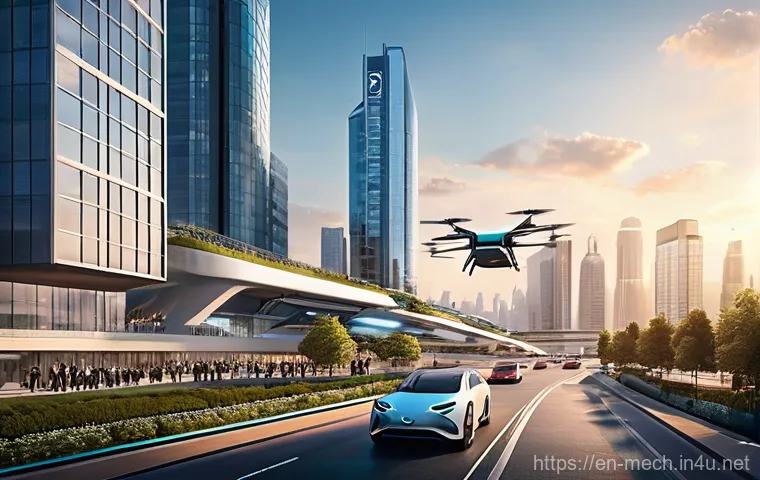
It’s truly invigorating to see how seriously the aviation industry is taking its environmental responsibilities these days. I mean, for years, we’ve heard the whispers and seen the small steps, but now, the push for truly sustainable aviation is becoming a roaring engine of innovation.
It’s not just about making slight tweaks; it’s a full-scale reimagining of how aircraft are powered and how they impact our beautiful planet. From hydrogen-powered concepts that look straight out of a sci-fi movie to sophisticated hybrid-electric systems, engineers are literally drawing up blueprints for a future where flight is cleaner, quieter, and much more integrated with ecological well-being.
This isn’t just some distant dream; it’s a rapidly accelerating reality that’s transforming every aspect of aircraft design, from the engines themselves to the very materials we use to build them.
I often think about how my own passion for engineering has evolved alongside this green revolution, moving from traditional challenges to tackling these incredibly complex environmental puzzles.
We’re on the cusp of something truly spectacular, and it’s an honor to witness it.
The Drive for Greener Propulsion
When we talk about greener propulsion, it’s not a one-size-fits-all solution, and that’s what makes it so exciting! We’re seeing incredible advancements across the board.
On one hand, fully electric aircraft are making strides, though primarily in smaller, regional applications for now. Imagine flying without the roar of jet engines, only a serene hum – it’s already happening!
Then there’s the whole realm of hybrid-electric systems, which are like the best of both worlds, blending traditional jet fuel with electric power for better efficiency and reduced emissions during certain flight phases.
But for me, the most captivating development has to be hydrogen. Whether it’s burning hydrogen directly or using fuel cells to generate electricity, the potential for zero in-flight carbon emissions is absolutely mind-blowing.
It presents its own set of engineering hurdles, like fuel storage and infrastructure, but the sheer ambition behind these projects is what drives us forward.
It’s a challenge that genuinely gets me out of bed in the morning, eager to see what new breakthroughs have emerged overnight.
Sustainable Aviation Fuels (SAFs): A Game Changer
Now, let’s talk about something that’s already making a tangible difference: Sustainable Aviation Fuels, or SAFs. For those who might not know, these aren’t just regular jet fuel with a fancy label.
SAFs are produced from renewable resources like used cooking oil, agricultural waste, or even municipal solid waste, and they can reduce lifecycle carbon emissions by up to 80% compared to conventional jet fuel.
What’s truly brilliant about SAFs is that they can often be “dropped in” to existing aircraft engines and infrastructure with little to no modification.
This means airlines don’t have to wait for entirely new aircraft designs to start making a significant environmental impact today. I remember hearing about the first commercial flights powered partially by SAFs, and it gave me goosebumps!
It’s such a clever way to bridge the gap between current aviation technology and the fully zero-emission future. The industry is working hard to scale up production, and honestly, every flight I take, I find myself wondering how much SAF is powering our journey.
It’s a vital stepping stone, and one that gives me immense hope for the future of flight.
Electric Dreams Taking Flight: The Silent Revolution
Have you ever envisioned a world where air travel is almost silent, where you can hear the birds chirping even as a plane passes overhead? That’s the promise of electric aircraft, and it’s no longer just a distant fantasy; it’s a rapidly unfolding reality.
The very idea of planes powered solely by electricity seemed almost absurd a decade ago, but the relentless pace of technological advancement, especially in battery and motor design, is truly astonishing.
We’re seeing prototypes and even small commercial models taking to the skies, demonstrating the incredible potential of this technology. It’s not just about reducing carbon footprints; it’s about drastically cutting down noise pollution around airports and urban centers, which would be a monumental shift for communities living near flight paths.
When I chat with fellow engineers, the excitement around electric aviation is palpable because it truly feels like we’re on the cusp of an entirely new chapter in flight, one that challenges every assumption we’ve ever held about how airplanes work.
The Promise of Electric Aircraft
The advantages of electric propulsion in aviation are just immense. First off, as I mentioned, there’s the massive reduction in operational noise, which could entirely change airport operations and the very concept of air travel in densely populated areas.
Imagine an air taxi that glides silently into a downtown vertiport – pure magic! Then, of course, there are the zero direct emissions during flight, which is a huge win for air quality and combating climate change.
Electric motors are also incredibly efficient, often requiring less maintenance than their fossil-fuel counterparts, potentially leading to lower operating costs for airlines in the long run.
I’ve been following several companies developing regional electric planes, and the progress they’re making with range and passenger capacity is truly impressive.
It’s a clear indicator that while we might start small, the vision for larger, more capable electric aircraft is absolutely within our grasp, paving the way for a revolutionary shift in how we commute and connect.
Overcoming Battery Challenges
Now, let’s be real: electric aviation isn’t without its hurdles, and the biggest one we face right now is battery technology. Powering a heavy aircraft for long distances requires an incredible amount of energy, and current battery energy density just isn’t quite there for large-scale commercial flights yet.
Weight is everything in aviation, and the heavier the batteries, the less payload an aircraft can carry and the shorter its range. This is where engineers are putting in countless hours, pushing the boundaries of lithium-ion technology and exploring solid-state batteries and other exotic chemistries.
We’re talking about advancements in cooling systems, battery management, and even modular battery swapping concepts to enable quicker turnarounds. It’s a complex dance between energy storage, power output, safety, and weight, but the pace of innovation is absolutely breathtaking.
I recall a conversation with a battery specialist at a conference who shared some of their breakthroughs, and it honestly felt like listening to someone from the future.
The solutions are coming, and they’re going to be revolutionary.
Beyond the Ordinary: Revolutionary Materials Shaping Aircraft
For anyone captivated by the art and science of flight, the evolution of materials science in aircraft design is nothing short of breathtaking. It’s not just about finding something that’s strong; it’s about discovering materials that are impossibly light, incredibly resilient, and sometimes even possess “smart” properties.
I mean, think about it: every ounce saved translates directly into better fuel efficiency, longer range, or increased payload. This relentless pursuit of the perfect material has led to some truly astounding innovations, moving us far beyond the aluminum shells of yesteryear.
When I look at a modern airliner or a cutting-edge concept aircraft, I don’t just see a vehicle; I see a symphony of advanced composites and alloys, each carefully selected for its unique role in pushing the boundaries of what’s aerodynamically and structurally possible.
It’s a testament to the ingenuity of materials scientists and engineers working hand-in-hand to redefine what flight can be.
Lighter, Stronger, Smarter Composites
Carbon fiber composites, for example, have absolutely revolutionized aircraft manufacturing. These aren’t your grandfather’s materials; they’re incredibly strong, extremely lightweight, and offer unparalleled design flexibility.
Using composites, engineers can craft complex, integrated structures that are not only more aerodynamic but also inherently more durable and resistant to fatigue than traditional metal structures.
It’s amazing to think that parts of an aircraft can now be designed with specific stiffness or flexibility in mind, optimizing performance in ways we only dreamed of decades ago.
I’ve even seen demonstrations of thermoplastic composites that can be heated and reformed, opening up possibilities for easier repairs and recycling. It’s not just about weight, either; these materials can contribute to improved fuel efficiency and a longer service life for the aircraft, ultimately reducing operational costs.
For me, working with these materials is like having a superpower, allowing us to sculpt the future of flight with precision and incredible strength.
Self-Healing and Adaptive Structures
Now, here’s where things start to sound like science fiction, but trust me, it’s very real: the emergence of self-healing and adaptive structures. Imagine an aircraft material that can automatically repair micro-cracks before they become a serious issue, or wings that can subtly change their shape in flight to optimize aerodynamics for varying conditions.
That’s the promise of these “smart” materials. Researchers are developing polymers that incorporate microcapsules containing healing agents, which release and repair damage when a crack forms.
Others are exploring piezoelectric materials that can deform in response to electrical signals, allowing for active control of wing shape or even vibration dampening.
While these technologies are still largely in the research and development phase, the implications for safety, maintenance, and performance are absolutely profound.
The idea of an aircraft that can sense and adapt to its environment, or even mend itself, is truly inspiring. It will lead to safer journeys and significantly extended operational lives for our flying machines.
| Material Type | Key Advantages | Typical Applications |
|---|---|---|
| Carbon Fiber Composites | Extremely high strength-to-weight ratio, excellent fatigue resistance, corrosion resistant. Allows for complex aerodynamic shapes. | Wing structures, fuselage sections, tail assemblies, engine nacelles. |
| Aluminum Alloys | Well-understood manufacturing processes, good strength, relatively low cost, reparability. | Traditional fuselage skins, ribs, spars, landing gear components. |
| Titanium Alloys | Superior strength at high temperatures, excellent corrosion resistance, high toughness. | Engine components, landing gear, high-stress areas, fasteners. |
Crafting the Future: How Advanced Manufacturing is Changing the Game
Manufacturing aircraft has always been a monumental undertaking, a symphony of precision, scale, and immense complexity. But even in this highly advanced field, we’re witnessing a revolution driven by cutting-edge manufacturing techniques.
It’s no longer just about machining and riveting; it’s about additive manufacturing, advanced robotics, and intelligent automation that are transforming how we conceive, produce, and even maintain aircraft.
This shift is enabling engineers to design parts that were once impossible to create, to streamline production processes, and ultimately, to build aircraft that are lighter, stronger, and more efficient than ever before.
For someone like me who loves to see theoretical designs come to life, watching these advanced manufacturing processes in action is absolutely mesmerizing.
It’s a powerful combination of human ingenuity and machine precision, unlocking capabilities that were once purely in the realm of imagination.
The Rise of Additive Manufacturing (3D Printing)
Let’s talk about 3D printing in aviation – it’s not just for small plastic prototypes anymore! We’re seeing metal 3D printing, also known as additive manufacturing, being used to create incredibly complex, high-performance parts for actual aircraft.
Imagine an engine component with internal cooling channels designed in shapes that no traditional machining process could ever achieve. That’s the power of additive manufacturing.
It allows for optimized geometries, reduced part counts (by integrating multiple components into a single printed piece), and significant weight savings.
I’ve personally seen incredible examples, from intricate brackets to turbine blades with internal lattice structures, all printed layer by layer. This technology also speeds up prototyping significantly, allowing designers to iterate and test new ideas at an unprecedented pace.
It’s a game-changer for reducing lead times and bringing innovative designs to market much faster, which for an industry that moves as carefully as aviation, is a huge deal.
Automated Assembly and Robotics
Beyond individual part creation, the entire assembly line for aircraft is also undergoing a massive transformation thanks to automation and robotics. Imagine giant robotic arms meticulously positioning and riveting fuselage sections with superhuman precision and consistency.
This isn’t just about speed; it’s about enhancing quality, reducing human error, and creating a safer working environment. Robots are particularly adept at repetitive tasks and working in confined spaces, freeing up human workers to focus on more complex, decision-making roles.
We’re seeing automated guided vehicles (AGVs) moving large aircraft components around factories, and intelligent systems coordinating entire assembly sequences.
This shift towards greater automation doesn’t mean fewer jobs; rather, it means a shift in the *type* of jobs, demanding higher-skilled operators and engineers who can program, maintain, and innovate these sophisticated robotic systems.
It’s a fascinating blend of man and machine, working together to build the next generation of flying marvels.
Smarter Than Ever: AI and Machine Learning in Aviation’s Core
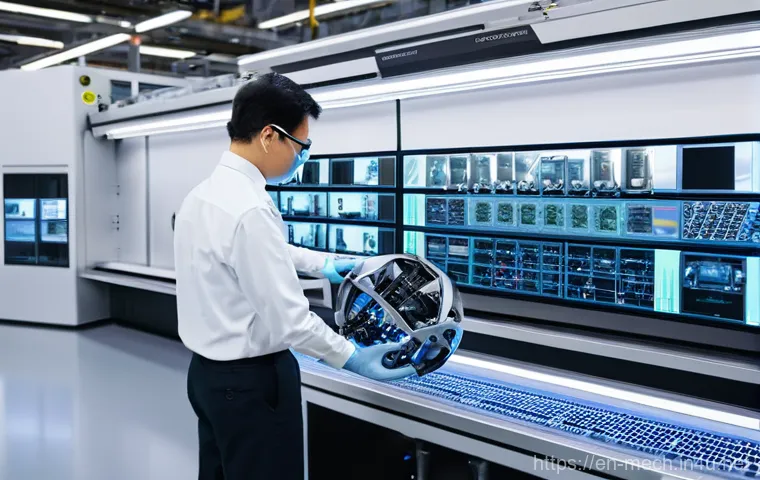
The integration of Artificial Intelligence and Machine Learning into aircraft design and operation isn’t just a trend; it’s a fundamental shift, akin to the invention of the jet engine itself.
When I think about how much data modern aircraft generate, it’s absolutely mind-boggling – terabytes of information on every flight! AI and ML are the tools that allow us to not just collect this data, but to actually *understand* it and leverage it to make aviation safer, more efficient, and incredibly intelligent.
From optimizing the very shapes of wings to predicting when a critical component might fail, these technologies are becoming the invisible co-pilots and design partners of the future.
It truly feels like we’re teaching planes to think, to learn, and to continuously improve, and as an engineer, that prospect is nothing short of electrifying.
The potential is limitless, and we’re just scratching the surface of what these intelligent systems can do for our skies.
AI-Powered Design Optimization
Gone are the days when designing an aircraft was solely about a team of engineers manually iterating through hundreds of possibilities. Now, AI algorithms can explore thousands, even millions, of design variations in a fraction of the time, optimizing for everything from aerodynamic efficiency and structural integrity to manufacturing feasibility.
Imagine an AI “brain” simulating countless wing shapes to find the absolute perfect balance of lift and drag, or an algorithm designing a fuselage structure that minimizes weight while maximizing safety margins.
It’s not just about speed; it’s about uncovering truly novel design solutions that human intuition alone might miss. I’ve seen some of the outputs from these generative design tools, and the shapes they propose are often counter-intuitive yet demonstrably superior.
It allows engineers to spend less time on tedious iterations and more time on high-level problem-solving and innovation, truly empowering us to push the boundaries of what’s possible in aircraft performance.
Predictive Maintenance: Keeping Us Safe in the Skies
This is one area where AI and machine learning are already having a massive, tangible impact: predictive maintenance. Instead of waiting for a component to fail (reactive maintenance) or replacing parts based on fixed schedules (preventive maintenance), AI can analyze real-time sensor data from aircraft components – engine performance, hydraulic pressures, vibration levels – and predict *when* a part is likely to fail *before* it actually does.
This is huge for safety, as it allows for proactive intervention, replacing a part during a scheduled downtime rather than dealing with an unexpected issue mid-flight.
It also means significant cost savings for airlines by optimizing maintenance schedules, reducing unnecessary part replacements, and minimizing costly aircraft downtime.
I remember when maintenance was a much more reactive process, and the peace of mind that predictive analytics offers, both for operators and passengers, is immense.
It’s a testament to how smart technology can make our journeys not only smoother but demonstrably safer.
Urban Air Mobility: The eVTOL Revolution is Here!
Okay, let’s talk about something that genuinely makes me feel like I’m living in the future: Urban Air Mobility (UAM) and the incredible rise of eVTOLs (electric Vertical Take-Off and Landing vehicles).
For decades, we’ve seen movies where people zip around cities in flying cars, and now, that vision is rapidly becoming a reality. These aren’t just scaled-down helicopters; they’re entirely new categories of aircraft, often multi-rotor, electrically powered, and designed specifically for short, intra-city flights.
Imagine skipping rush-hour traffic by hopping into an air taxi that whisks you from your office to the airport in minutes. How cool is that? The prospect of unlocking a new dimension of urban transportation is incredibly exciting, promising to revolutionize how we live, work, and move around our bustling cities.
It’s an engineer’s dream to be at the forefront of such a paradigm shift, designing not just vehicles, but an entirely new transportation ecosystem.
Reimagining Our Daily Commute
The core promise of eVTOLs is to completely reimagine our daily commute. Think about those frustrating hours spent stuck in traffic, breathing in exhaust fumes.
eVTOLs offer a way to bypass ground congestion entirely, potentially cutting travel times from an hour or more down to mere minutes. This isn’t just about convenience; it has the potential to unlock huge economic benefits by improving productivity and connecting underserved areas.
Companies are developing a variety of concepts, from two-seater personal air vehicles to larger air taxis capable of carrying multiple passengers. The focus is on making these vehicles autonomous or semi-autonomous, ensuring safety and ease of operation.
I genuinely believe that in the not-too-distant future, seeing eVTOLs gracefully ascending and descending from designated vertiports will be as commonplace as seeing buses and trains today.
It’s an electrifying thought that still gives me chills!
The Regulatory Road Ahead
Of course, bringing a completely new mode of transportation into existence isn’t without its challenges, and a huge part of the puzzle for eVTOLs is navigating the regulatory landscape.
We’re talking about integrating hundreds, perhaps thousands, of new aircraft into already crowded airspace, often over densely populated areas. This requires entirely new air traffic management systems, robust safety protocols, and clear certification pathways.
Aviation authorities around the world are working tirelessly to develop the rules and infrastructure necessary to ensure these air taxis can operate safely and efficiently.
Things like noise regulations, pilot training (or autonomous system certification), vertiport design, and even passenger security need to be meticulously planned and implemented.
It’s a complex dance between innovation and regulation, but one that’s absolutely essential for the widespread adoption of urban air mobility. The progress I’m seeing on this front is encouraging, with many stakeholders collaborating to pave the way for this exciting new era of flight.
The Human Element: The Undeniable Role of Engineering Visionaries
As we talk about AI, advanced materials, and electric propulsion, it’s easy to get lost in the sheer technological marvel of it all. But beneath every cutting-edge innovation, every groundbreaking design, and every successful flight, there’s always the undeniable, irreplaceable human element.
It’s the engineers, the designers, the dreamers, and the problem-solvers who are the true architects of this future. Their passion, their expertise, and their relentless dedication are what transform abstract concepts into tangible flying machines.
I’ve always believed that while technology provides the tools, it’s human ingenuity and a deep understanding of physics, materials, and human needs that truly drive progress.
It’s truly inspiring to be part of a community where creativity and analytical rigor come together to literally shape the skies above us.
Bridging Innovation and Reality
The real magic happens when visionary ideas meet the practical realities of engineering. It’s one thing to sketch a hydrogen-powered aircraft on a whiteboard; it’s an entirely different challenge to design and build one that can safely and efficiently carry passengers.
This is where engineers step in, bridging the gap between audacious innovation and concrete reality. They’re the ones meticulously calculating stresses, simulating flight performance, selecting the right materials, and designing manufacturing processes.
It requires not just technical prowess but also incredible creativity to solve problems that have never been tackled before. I find immense satisfaction in this process, in taking a complex challenge and breaking it down into manageable, solvable pieces.
It’s about turning “what if” into “how we can,” and that collaborative spirit, that drive to make the impossible possible, is what truly defines this field.
The Next Generation of Aviation Pioneers
What truly excites me about the current state of aircraft design is the promise it holds for the next generation of engineers and aviation enthusiasts.
We’re living through a period of such rapid and profound change that the opportunities for young minds to make a significant impact are unprecedented.
Whether it’s developing the next generation of sustainable fuels, designing lighter and stronger materials, programming intelligent autonomous flight systems, or even shaping the policies that govern urban air mobility, there’s a place for every kind of passion.
The skills required are evolving, emphasizing not just traditional engineering principles but also computational thinking, interdisciplinary collaboration, and a deep understanding of environmental responsibility.
I love speaking to students and seeing that spark in their eyes when they realize they can be part of this incredible journey, shaping how humanity will fly for decades to come.
The future of flight is in incredibly capable hands, and I can’t wait to see what they achieve.
Wrapping Things Up
Wow, what an incredible journey we’ve taken together through the skies of tomorrow! It’s truly amazing to see how quickly innovation is propelling us towards a cleaner, smarter, and more accessible future for aviation. From the silent hum of electric planes to the mind-bending possibilities of AI in design and maintenance, and even the everyday reality of urban air mobility, the changes are profound and exciting. I genuinely feel like we’re standing at the precipice of a golden age for flight, driven by passionate engineers and visionaries who are constantly pushing the envelope. It’s a future that promises not just faster travel, but travel that’s kinder to our planet and more integrated into our lives, and I can’t wait to see it unfold.
Pro Tips for the Aviation Enthusiast
1. Stay informed about Sustainable Aviation Fuels (SAFs)! They’re not just a future concept; they’re actively being used today. Keep an eye on airlines that are investing heavily in SAFs, as supporting them helps drive demand and production for a greener future.
2. If you’re fascinated by eVTOLs and urban air mobility, consider researching the regulatory bodies in your region. Understanding how airspace is being adapted for these new vehicles gives you a unique insight into the practical challenges and exciting solutions being developed.
3. For those with an engineering bent, delve into the world of advanced composites. Companies are always looking for fresh minds to innovate lighter and stronger materials. It’s a field where your contributions can truly make a tangible difference in aircraft performance.
4. Keep an eye on predictive maintenance technologies. While it might sound technical, the underlying concept is simple: using data to prevent problems. This is transforming airline operations and safety, and understanding its impact gives you a deeper appreciation for modern aviation’s reliability.
5. Engage with aviation communities online or at local airshows! There’s nothing quite like connecting with fellow enthusiasts and professionals to share insights and learn about the latest breakthroughs directly from those on the front lines of aerospace innovation. You’d be surprised how much you can learn from a good conversation!
My Key Takeaways
Looking back at everything we’ve covered, what truly stands out to me is the incredible synergy of innovation happening across the aviation industry. We’re not just improving existing technologies; we’re redefining what flight means. From the undeniable push for eco-friendly propulsion and revolutionary materials to the integration of AI for smarter design and maintenance, and the exciting advent of urban air mobility, every facet of aviation is undergoing a profound transformation. But amidst all this technological marvel, the unwavering human spirit of ingenuity and collaboration remains the true driving force. It’s a powerful reminder that our collective passion and expertise are paving the way for a future of flight that is safer, more sustainable, and more connected than we ever dared to imagine.
Frequently Asked Questions (FAQ) 📖
Q: What are the most exciting innovations reshaping aircraft design right now, and how are they impacting the future of flight?
A: Honestly, it’s mind-blowing what’s happening in aircraft design today! From my perspective, the biggest game-changers are definitely the push for sustainable aviation and the emergence of electric Vertical Take-Off and Landing (eVTOL) vehicles.
We’re talking about a complete overhaul of how planes are powered and how we move through the air. First up, Sustainable Aviation Fuels (SAFs) and new clean propulsion technologies are taking center stage.
The goal is net-zero carbon emissions, and that means looking beyond traditional jet fuel. I’ve been keeping a close eye on developments like hydrogen fuel cell integration and advanced biofuels made from things like municipal waste or algae.
These aren’t just concepts anymore; companies are actively investing in R&D and integrating SAFs into their fleets, with the EU even mandating a minimum SAF blending rate by 2025.
This shift directly impacts design by demanding more fuel-efficient aircraft, lighter composite materials, and advanced propulsion systems. It’s about making flight greener and significantly reducing our environmental footprint.
Then there are eVTOLs – these are the real futuristic stars! Imagine air taxis silently zipping across cities, bypassing traffic. This isn’t science fiction; companies like Joby Aviation and Archer Aviation are finalizing certification processes for commercial eVTOLs, with some expected to launch in key urban markets by late 2025.
The design here is revolutionary, leveraging electric propulsion for vertical takeoff and landing, eliminating the need for long runways. They’re quiet, efficient, and promise to completely transform urban mobility.
I truly believe eVTOLs will change how we think about short-distance travel, offering a cleaner, more convenient option. It’s exhilarating to see these designs move from drawing boards to actual flight tests, with companies like Horizon Aircraft even achieving successful fan-in-wing forward transition flights with their prototypes!
These innovations aren’t just incremental improvements; they’re foundational shifts that are literally redefining what’s possible in our skies.
Q: How are cutting-edge technologies like
A: I, machine learning, and advanced manufacturing fundamentally changing the way aircraft are designed and produced? A2: It’s incredible to see how tech is reshaping everything, and aircraft design is no exception!
From my own observations and what I’ve learned, technologies like AI, machine learning, and advanced manufacturing, especially 3D printing, are absolutely pivotal in accelerating innovation and making planes better, lighter, and more efficient.
Let’s talk about Additive Manufacturing, or 3D printing. This isn’t just for hobbyists anymore; it’s a game-changer for aerospace. Instead of cutting material away, engineers build parts layer by layer, which allows for incredibly complex geometries and intricate internal structures that simply wouldn’t be possible with traditional methods.
What does this mean for aircraft? Lighter components, for one! Weight is the enemy of fuel efficiency, so being able to print strong, lightweight parts from materials like titanium or specialized composites is huge.
For example, the GE9X engines on the Boeing 777x use over 300 3D-printed parts, making it super efficient. It also speeds up prototyping significantly, allowing designers to test and refine parts much faster and reduce costs.
I’ve seen firsthand how this can cut down lead times from months to weeks, giving engineers more freedom to experiment and optimize. Then we have Artificial Intelligence (AI) and Machine Learning (ML), which are like rocket fuel for the design process.
Historically, aerospace design was painstakingly manual and iterative. Now, AI algorithms can analyze vast amounts of data from past projects, identify patterns, and even generate multiple design alternatives based on specific parameters like weight, size, and material.
This ‘generative design’ approach leads to optimized designs that human engineers might not have conceived. Boeing, for instance, has used AI-driven generative design to achieve significant weight reductions and enhanced performance in aircraft components.
Beyond design, AI is revolutionizing manufacturing by powering robots for assembly, welding, and quality control, ensuring precision that’s beyond human capability.
And get this – AI is even crucial for predictive maintenance, analyzing sensor data to foresee potential issues before they become costly repairs or safety incidents.
It’s truly amazing how these smart systems are making aircraft not just smarter, but safer and more reliable.
Q: For someone looking to get into aerospace engineering, what are the key skills and areas of focus that will be most valuable in this rapidly evolving field?
A: If you’re passionate about aircraft and want to dive into aerospace engineering right now, you’re picking an incredible time! The field is booming with innovation, which also means the skills needed are evolving.
Based on my own journey and what I’m seeing across the industry, here’s what I’d absolutely recommend you focus on to thrive:First and foremost, a strong foundation in core engineering principles is non-negotiable.
That means solid math skills, especially calculus, differential equations, and linear algebra, along with a deep understanding of physics, particularly aerodynamics, fluid mechanics, and thermodynamics.
These are your building blocks, plain and simple. However, beyond the traditional, what’s really setting people apart today are skills that embrace the new era of aviation.
I’d highlight:Digital Transformation & Computational Skills: This is huge. You need to be comfortable with advanced software for design (CAD/CAE), simulation (CFD), and data analysis.
Expertise in programming languages and an understanding of how AI and machine learning work will be incredibly valuable, as these are driving design optimization and predictive maintenance.
Being able to “speak” the language of data and algorithms is becoming just as important as understanding physics. Sustainability Mindset: With the industry’s strong push towards net-zero, having an understanding of sustainable engineering principles, alternative propulsion systems (electric, hybrid, hydrogen), and sustainable materials is crucial.
If you can contribute to designing greener aircraft or processes, you’ll be highly sought after. Additive Manufacturing & Materials Science: As we discussed, 3D printing is everywhere.
Knowledge of additive manufacturing processes and expertise in advanced materials like composites and specialized alloys will give you a significant edge.
Understanding how to design for these new manufacturing methods is key. Critical Thinking & Problem-Solving: Aircraft design is all about solving complex, multi-variable problems.
You’ll need to be able to identify issues, analyze them from multiple angles, question assumptions, and come up with innovative solutions. It’s not just about knowing the answers, but knowing how to find them.
Communication & Collaboration: You won’t be working in a vacuum. Aerospace projects are massive team efforts. Being able to clearly articulate your ideas, write concise technical reports, and collaborate effectively with diverse teams is absolutely essential.
In my experience, the engineers who truly excel are those who blend solid technical fundamentals with a keen eye for emerging technologies and a collaborative spirit.
Continuous learning is the name of the game in this field, so keep that curiosity alive!