Hey everyone! As someone who’s spent years fascinated by how the world around us is built, from the tiniest intricate mechanisms to soaring skyscrapers, I can tell you there’s truly nothing quite like the marvel of structural design.
It’s not just about making things stand up anymore; it’s about pioneering the future, literally building tomorrow’s world. I’ve been diving deep into the latest shifts, and honestly, the pace of innovation in mechanical engineering and structural design is simply breathtaking.
We’re seeing everything from AI-driven optimization that sculpts incredibly efficient forms to smart materials that can actually heal themselves! It’s all about creating structures that are not only incredibly strong and safe but also unbelievably sustainable and adaptable to our planet’s ever-changing demands.
This isn’t just theory; these are the exciting realities shaping our cities and infrastructure right now, making me incredibly optimistic about what’s next.
So, if you’re curious about how we’re engineering a more resilient, efficient, and intelligent future, you’re in the right place. Let’s peel back the layers and uncover the groundbreaking innovations transforming structural design in mechanical engineering.
AI and Machine Learning: Sculpting Tomorrow’s Structures
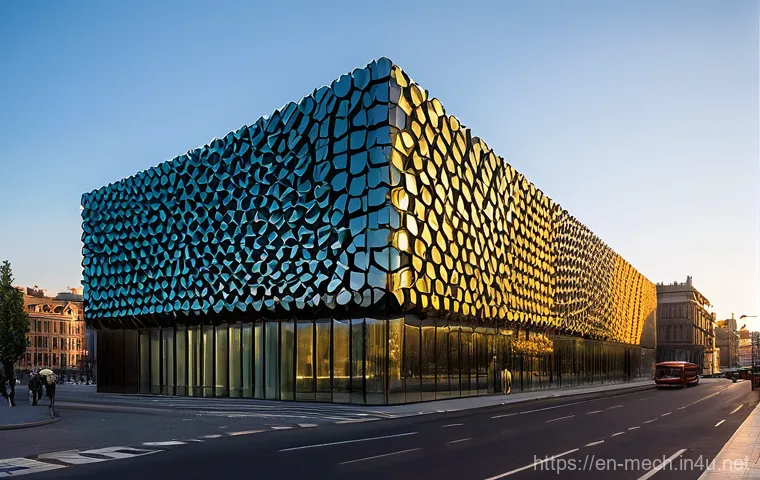
Honestly, when I first started in this field, the idea of a computer designing a bridge seemed like something straight out of a sci-fi movie. But fast forward to today, and AI and machine learning aren’t just aiding designers; they’re actively shaping the very foundations of our built world. It’s a game-changer, pushing boundaries we didn’t even know existed. I’ve seen firsthand how these incredible algorithms can sift through countless design permutations in a fraction of the time it would take a human engineer, uncovering efficiencies and optimal forms that are truly mind-boggling. This isn’t about replacing human ingenuity, but rather augmenting it, allowing us to focus on the bigger picture and the more creative problem-solving aspects. The sheer analytical power now at our fingertips means we can create structures that are lighter, stronger, and use materials far more efficiently than ever before, reducing waste and cost. It’s like having an army of super-smart apprentices working tirelessly on every single detail, ensuring every element is perfectly optimized for its purpose. The implications for complex projects, from high-rise towers to intricate aerospace components, are simply immense.
Generative Design: Beyond Human Intuition
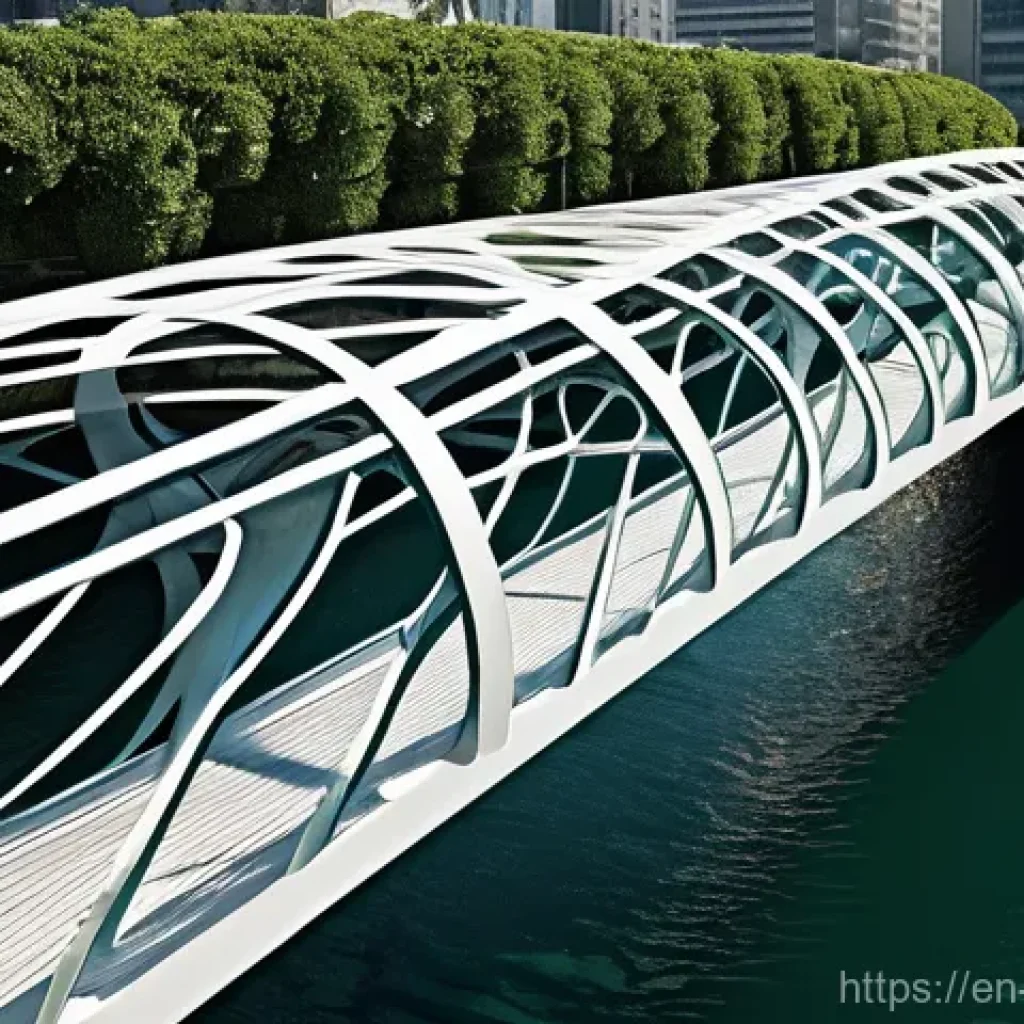
Generative design, powered by AI, is perhaps one of the most exciting developments I’ve witnessed. Instead of starting with a blank slate and designing outwards, we define the parameters – loads, material properties, manufacturing constraints – and the AI generates hundreds, sometimes thousands, of potential designs. What truly blows me away is that many of these designs are so unconventional, so outside the box of traditional engineering thinking, yet incredibly efficient. I recall seeing a structural bracket designed by generative AI that looked almost organic, like a bone structure, yet it was demonstrably stronger and lighter than any human-designed equivalent. It’s forcing us to re-evaluate what ‘looks right’ in engineering, moving us towards forms that are optimized purely by performance. This isn’t just about aesthetics; it’s about unparalleled structural integrity and resource conservation. It really feels like we’re tapping into a new dimension of design possibilities.
Predictive Maintenance: Keeping Our Buildings Healthy
Beyond initial design, AI is also revolutionizing how we maintain our structures. Imagine a building that tells you exactly when and where it needs attention, long before a visible problem arises. That’s the promise of AI-driven predictive maintenance. By integrating sensors into bridges, buildings, and infrastructure, we can continuously monitor their structural health. Machine learning algorithms analyze this constant stream of data, detecting subtle anomalies that indicate potential fatigue, corrosion, or stress. I’ve heard stories from engineers working on older infrastructure projects where AI has pinpointed issues that would have been impossible to find through traditional inspection methods, potentially preventing catastrophic failures. It transforms maintenance from a reactive, costly endeavor into a proactive, efficient one, extending the lifespan of our essential infrastructure and ensuring public safety. It’s a huge shift from waiting for something to break to knowing exactly when it will *start* to break.
Smart Materials: When Buildings Come Alive
This is where things truly start to feel futuristic. We’re moving beyond inert concrete and steel to materials that actively respond to their environment, adapting and even healing themselves. I mean, who would have thought that a crack in a building could literally mend itself? These aren’t just laboratory curiosities; they’re becoming tangible realities in projects worldwide, offering unprecedented levels of durability, safety, and sustainability. The idea that a structure can detect a change in temperature or stress and react accordingly—that’s a paradigm shift. I remember talking to a materials scientist who likened it to the human body’s ability to heal itself; a fascinating and incredibly powerful analogy for what we’re aiming for in the built environment. From self-cleaning surfaces to materials that can change their thermal properties on demand, the possibilities are genuinely endless, and I find myself constantly checking for the latest breakthroughs because they’re happening so rapidly.
Self-Healing Concrete and Composites
Okay, this is one of my absolute favorites because it sounds like magic. Self-healing concrete, often embedded with bacteria or encapsulated healing agents, can actually repair small cracks as they form, extending the life of structures and significantly reducing maintenance costs. Think about all the bridges, tunnels, and buildings that suffer from minor cracks over time, leading to major structural issues down the line. With self-healing materials, these issues are nipped in the bud, sometimes without any human intervention at all. And it’s not just concrete; we’re seeing advancements in self-healing polymers and composites too, materials that can restore their structural integrity after damage. I’ve personally seen demonstrations where a micro-fracture “sealed” itself within hours, a truly astonishing feat of material science. This innovation is a massive leap forward for durability and sustainability, ensuring our infrastructure remains robust for generations.
Adaptive Facades: Breathing with the Environment
Imagine a building facade that opens and closes pores like skin, adapting to sunlight and temperature to optimize internal conditions. That’s what adaptive facades are all about. These smart systems use responsive materials or integrated mechanics to dynamically adjust to external environmental factors, improving energy efficiency and occupant comfort. They can optimize daylighting, reduce solar heat gain, and even generate energy. I find it fascinating how architects and engineers are collaborating to design these ‘living skins’ for buildings, turning static structures into dynamic entities. It’s a blend of aesthetic innovation and profound engineering, where the building itself becomes a sophisticated environmental regulator. It’s a far cry from the fixed, energy-intensive glass boxes of the past, marking a truly intelligent approach to building design.
Building Green: The Sustainable Structural Revolution
For a long time, the focus in structural design was purely on strength and stability. While those are still paramount, sustainability has absolutely rocketed to the top of the priority list, and rightly so. I’ve personally been involved in projects where the primary driver wasn’t just ‘can it stand up?’ but ‘how can it stand up with the least environmental impact?’ This isn’t just a trend; it’s a fundamental shift in philosophy, pushing us towards innovative solutions that minimize carbon footprints, conserve resources, and promote ecological balance. It’s about designing buildings and infrastructure that are good neighbors to the planet, using less, wasting less, and enduring longer. From the materials we choose to the methods we employ, every decision is now viewed through a sustainable lens, and it’s making our jobs more challenging but infinitely more rewarding. We’re truly building for the future, not just for the present.
Bio-Inspired Design: Learning from Nature’s Blueprints
Nature has been perfecting structural design for billions of years, so why not learn from the master? Bio-inspired design, or biomimicry, is all about taking cues from biological structures and processes to solve engineering challenges. Think about the incredible strength-to-weight ratio of a bird’s bone, or the incredible resilience of a spider’s web. Engineers are now studying these natural marvels to design more efficient, robust, and sustainable structures. I’ve seen some incredible examples, like new architectural forms that mimic the branching patterns of trees to distribute loads more effectively, or materials developed by observing how seashells achieve their immense strength. It’s an inspiring field because it reminds us that the best solutions often already exist in the natural world, waiting for us to discover and adapt them. It’s a humbling yet empowering approach.
Circular Economy in Construction: Waste Not, Want Not
The traditional linear model of ‘take-make-dispose’ is clearly unsustainable. That’s why the concept of a circular economy is gaining so much traction in construction. It’s about designing buildings and materials for disassembly, reuse, and recycling, rather than demolition and landfill. I’ve been really encouraged by initiatives that focus on modular construction, allowing components to be easily removed and repurposed. We’re also seeing an increased use of recycled content in new materials, from steel to aggregates. The goal is to keep materials in use for as long as possible, extracting maximum value from them. It’s a complex challenge, requiring collaboration across the entire supply chain, but the economic and environmental benefits are enormous. It’s about viewing waste as a resource, which fundamentally changes how we approach every stage of a building’s lifecycle.
Additive Manufacturing: Printing Our Future, Piece by Piece
3D printing, or additive manufacturing, has moved far beyond small plastic prototypes. We’re now talking about printing entire building components, and even entire houses! This technology is revolutionizing how we think about construction, offering unprecedented design freedom, material efficiency, and speed. I personally believe this is one of the most exciting areas because it literally allows us to manifest complex designs directly from a digital model, eliminating many of the traditional constraints and costs associated with bespoke fabrication. The precision is incredible, and the ability to create intricate internal geometries that would be impossible with conventional methods opens up a whole new world of optimized structural elements. It’s not just about speed; it’s about making structures stronger and more efficient by leveraging complex internal structures that were previously out of reach.
Large-Scale 3D Printing in Construction
Imagine a giant robot arm extruding concrete or polymer mixtures to build walls and foundations layer by layer. This isn’t science fiction; it’s happening right now! Large-scale 3D printing is dramatically accelerating construction timelines, reducing labor costs, and enabling rapid deployment in remote or disaster-stricken areas. I recently read about a project in the Netherlands where a 3D-printed bridge was installed, showcasing not only the structural integrity but also the aesthetic possibilities of the technology. It allows for highly customized structures without the need for complex formwork, slashing material waste. For me, the most impactful aspect is how it democratizes construction, potentially making affordable housing more accessible globally. It’s still in its early stages for large structures, but the trajectory is clear: bigger, faster, more complex, and more sustainable builds.
Custom Components: Precision on Demand
Beyond entire buildings, additive manufacturing is also transforming the way we create specific, high-performance structural components. Think about highly complex connection nodes for geodesic domes, or lightweight brackets for aerospace applications. With 3D printing, these can be optimized for exact load requirements and produced with incredible precision, often consolidating multiple parts into a single, more robust component. I’ve seen some incredible examples of latticed structural elements that achieve incredible strength with minimal material, all thanks to the freedom of additive manufacturing. It allows engineers to move away from standardized, often over-engineered parts, towards bespoke solutions that are perfectly tailored to their function. This level of customization leads to significant weight savings and enhanced performance, which is critical in industries where every gram counts.
Rethinking Resilience: Designing for a Dynamic World
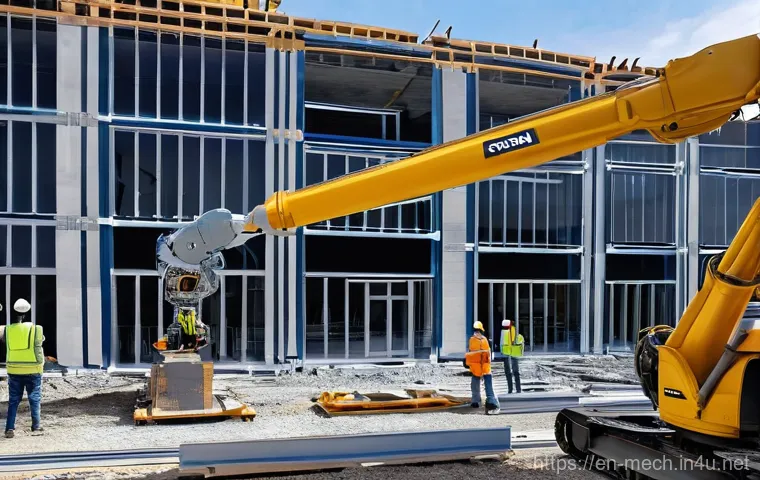
The world around us is constantly changing, and our structures need to keep pace. From increasingly frequent extreme weather events to seismic activity, designing for resilience has never been more critical. It’s not enough for a building to simply withstand a single event; it needs to recover quickly, to remain functional, and to protect its occupants. I’ve personally seen the devastating aftermath of natural disasters, and it really drives home the importance of going beyond minimum building codes. Engineers are now employing cutting-edge techniques and innovative materials to create structures that are not just strong but ‘smart’ in how they handle dynamic forces. This means integrating systems that can dissipate energy, absorb shock, and even adapt their structural properties in real-time. It’s a proactive approach to ensure our infrastructure can stand strong against whatever challenges the future holds.
Earthquake-Proofing with Innovative Dampers
When it comes to earthquakes, the goal isn’t necessarily to make a building completely rigid – sometimes, a little controlled flexibility is better. Innovative damping systems, similar to shock absorbers in a car, are being integrated into structures to dissipate seismic energy. These can range from massive pendulums at the top of skyscrapers, like those I’ve seen in Taipei, to viscous fluid dampers embedded within a building’s frame. These systems allow the building to sway and absorb the energy of an earthquake rather than resisting it rigidly and potentially failing. It’s a sophisticated dance between flexibility and strength, where the building moves with the earth’s forces to protect its core integrity and, most importantly, the lives within. It’s truly incredible engineering to witness in action during a tremor.
Flood and Wind Resistance: Adapting to Climate Change
With changing climate patterns, extreme winds and flooding are becoming more prevalent, requiring new approaches to structural design. For wind resistance, engineers are utilizing aerodynamic shaping, advanced cladding systems, and even tuned mass dampers to counteract powerful gusts. I’ve been fascinated by designs that incorporate permeable ground surfaces and elevated structures to mitigate flood damage, essentially allowing water to pass through or under a building without compromising its foundations. It’s about designing buildings that are not just static objects but intelligent responses to their environment, recognizing that our planet’s conditions are becoming increasingly dynamic. This means everything from stronger foundations to flexible connections that can endure the racking forces of high winds. We’re truly building for a future that looks different than the past.
Robotics on the Jobsite: The Dawn of Automated Construction
If you’ve ever been to a construction site, you know it’s a hive of activity, often labor-intensive and sometimes hazardous. But imagine a future where much of that heavy lifting and repetitive work is handled by smart robots. That future is already here, in pockets, and it’s rapidly expanding. Robotics in construction isn’t just about efficiency; it’s about dramatically improving safety, precision, and consistency. From bricklaying robots that work tirelessly and perfectly align every brick, to autonomous excavators, these machines are transforming the physical act of building. I’ve seen demonstrations of robots performing tasks like rebar tying and welding with an accuracy that humans simply can’t match over prolonged periods. This isn’t about taking jobs, it’s about taking on the dangerous, dirty, and dull tasks, freeing up human workers for more complex oversight and specialized roles. It’s making construction sites smarter and safer spaces.
Automated Assembly: Faster, Safer, Smarter
Automated assembly systems, sometimes using robotic arms or gantry systems, are becoming integral to prefabrication and modular construction. Components can be assembled in a controlled factory environment with much greater precision and speed than on-site. I recently visited a facility where robotic systems were assembling entire bathroom pods for apartment buildings, complete with plumbing and electrical, before they were shipped to the construction site. This significantly reduces on-site labor requirements, minimizes weather delays, and enhances quality control. It’s a cleaner, quieter, and ultimately more efficient way to build. The future of construction isn’t just about individual robots, but about integrated robotic systems working in concert to create highly efficient, automated workflows, drastically changing construction logistics and timelines.
Inspection Drones: Eyes in the Sky
One of the most practical and immediate applications of robotics I’ve observed is the use of drones for inspection. Instead of sending a human up a scaffolding or a precarious crane, drones equipped with high-resolution cameras, thermal imaging, and even LiDAR can quickly and safely inspect everything from tall facades to bridge undersides. I’ve personally used drones to survey large construction sites, collecting vast amounts of data in minutes that would have taken days for a human team. They can identify cracks, corrosion, moisture infiltration, and even measure dimensions with incredible accuracy. This technology saves time, reduces risk for workers, and provides a comprehensive, objective record of a structure’s condition, making maintenance planning far more effective. It’s truly an invaluable tool for ensuring structural integrity throughout a building’s lifecycle.
Advanced Simulation: The Virtual Prototyping Revolution
Before a single brick is laid or a single beam is fabricated, modern structural engineers are building and testing their creations in the virtual world. Advanced simulation tools, from Finite Element Analysis (FEA) to Computational Fluid Dynamics (CFD), allow us to predict how a structure will behave under virtually any condition. This isn’t just about basic stress analysis anymore; it’s about modeling dynamic wind loads, seismic responses, thermal expansion, and even the propagation of fire. I vividly remember the days of simpler calculations, and honestly, the power of today’s simulation software is almost unbelievable. It allows us to iterate designs rapidly, identify potential failure points early, and optimize performance long before any physical material is committed. It saves immense amounts of time and money, and critically, it makes our structures safer and more reliable than ever before. It’s like having a crystal ball for engineering.
Digital Twins: Real-Time Performance Monitoring
The concept of a “digital twin” is one that truly excites me. Imagine a virtual replica of a physical building or bridge, updated in real-time with data from sensors embedded in the actual structure. This digital twin allows engineers and facility managers to monitor performance, predict maintenance needs, and even simulate potential future scenarios. I’ve seen digital twins used to optimize energy consumption in large commercial buildings, identifying inefficiencies that would otherwise go unnoticed. For a bridge, a digital twin could simulate the impact of increased traffic loads or predict fatigue issues long before they become critical. It turns a static design document into a living, breathing model that provides continuous insight into a structure’s health and operational efficiency. It’s a profound shift towards truly intelligent asset management.
FEA and CFD: Unlocking Complex Behaviors
Finite Element Analysis (FEA) and Computational Fluid Dynamics (CFD) are the workhorses of advanced simulation. FEA breaks down complex structures into tiny, manageable elements to analyze stress, strain, and deformation under various loads. It’s what allows us to model everything from the deflection of a skyscraper in a hurricane to the precise behavior of a joint under immense pressure. CFD, on the other hand, simulates fluid flow – critical for understanding wind forces on buildings, ventilation systems, and even the spread of smoke in a fire. I’ve spent countless hours using these tools, and they’ve revealed insights into structural behavior that would be impossible to gain through physical testing alone. They are indispensable for pushing the boundaries of what’s possible in structural design, allowing us to build taller, lighter, and more complex structures with confidence.
| Innovation Area | Key Benefit for Structural Design | Example Application |
|---|---|---|
| AI & Generative Design | Optimized geometry for strength and material efficiency | Lightweight, organically shaped structural components for aerospace or bridges |
| Smart Materials | Increased durability, self-repair capabilities, adaptive performance | Self-healing concrete in tunnels, adaptive facades for energy efficiency |
| Sustainable Practices | Reduced environmental impact, lower lifecycle costs | Bio-inspired structural forms, buildings designed for deconstruction and reuse |
| Additive Manufacturing | Design freedom, rapid prototyping, bespoke component creation | 3D printed residential homes, customized complex joint connectors |
| Enhanced Resilience | Improved resistance to natural disasters, quicker recovery | Buildings with advanced seismic dampers, flood-resistant foundations |
| Robotics in Construction | Increased safety, precision, speed, and efficiency on job sites | Automated bricklaying, drone-based infrastructure inspection |
| Advanced Simulation | Accurate prediction of structural behavior, virtual prototyping | Digital twins for real-time performance monitoring of bridges, detailed wind load analysis |
Wrapping Things Up
Wow, what a journey through the incredible advancements shaping our built environment! Honestly, seeing how far we’ve come with AI, smart materials, and sustainable practices truly makes me optimistic for the future. It’s not just about building bigger or taller; it’s about building smarter, safer, and with a profound respect for our planet. I genuinely believe that by embracing these innovations, we’re not only constructing amazing structures but also laying the groundwork for a more resilient and harmonious world for generations to come. It’s an exciting time to be part of this evolution, wouldn’t you agree?
Good-to-Know Info You’ll Love
If you’re as fascinated by this stuff as I am, here are a few practical pointers to help you navigate this rapidly evolving landscape:
1. Stay Plugged In: The world of structural design and construction tech is moving at lightning speed! I find that regularly checking industry publications, attending virtual summits, and joining professional online communities are fantastic ways to keep your finger on the pulse. You’ll often discover new tools and insights long before they become mainstream.
2. Explore New Career Paths: The integration of AI and machine learning is creating a whole host of exciting new roles in construction. Think about positions like Construction Data Analyst, AI Project Manager, or even a Sustainability Consultant specializing in AI-driven solutions. If you’re looking to future-proof your career, gaining skills in data analytics or AI applications in design and project management could be a game-changer.
3. Embrace Smart Home Benefits: Even if you’re not designing a skyscraper, you can leverage smart technology in your own living space. Smart systems can significantly reduce your electricity bills by optimizing lighting and HVAC, enhance your comfort by adjusting temperatures automatically, improve indoor air quality, and even boost your home’s security with connected devices. It’s truly amazing how much control you can have!
4. Make Your Home Climate-Resilient: With changing weather patterns, thinking about your home’s resilience is more important than ever. Consider practical upgrades like installing flood vents, reinforcing windows against high winds, or even exploring cool roofing and reflective materials to combat extreme heat. These steps can offer crucial protection and peace of mind.
5. Understand Green Building Certifications: If you’re involved in building or remodeling, or just curious about sustainable living, familiarize yourself with green building certifications like LEED or ENERGY STAR. These certifications help verify that a building meets high standards for energy efficiency, water conservation, and overall environmental performance, which can be a huge value add.
Key Takeaways to Remember
Ultimately, the future of structural design is bright, driven by an incredible blend of innovation, sustainability, and human ingenuity. From AI-powered design to self-healing materials and automated construction, we’re building a world that’s not just stronger and more efficient, but also more responsive and respectful of our planet. These aren’t just technological trends; they’re fundamental shifts that are redefining what’s possible in the built environment, making our structures smarter, safer, and truly future-ready.
Frequently Asked Questions (FAQ) 📖
Q: How exactly is
A: I transforming the nuts and bolts of structural design today? A1: Oh, this is one of my favorite topics! When I first started seeing “AI” pop up in engineering discussions, I’ll admit, I was a little skeptical it would move beyond academic papers.
But wow, has it proven me wrong. What I’ve personally witnessed is AI moving from a theoretical concept to an absolute powerhouse in optimizing structural forms.
We’re talking about algorithms that can iterate through thousands, even millions, of design possibilities in minutes, finding geometries that are incredibly strong yet use far less material than a human engineer could ever conceive in that timeframe.
It’s like having an army of brilliant designers working tirelessly, not just making things stand up, but making them stand up with unparalleled efficiency and elegance.
My experience has shown me that AI isn’t replacing human creativity; it’s supercharging it, allowing us to focus on the bigger picture and push the boundaries of what’s physically possible.
It’s truly game-changing for making structures lighter, stronger, and more cost-effective.
Q: You mentioned “smart materials” that can heal themselves – that sounds like something out of a sci-fi movie! How are these innovative materials making our structures more sustainable and adaptable?
A: Believe me, I get that reaction a lot! It does sound futuristic, doesn’t it? But these smart materials are very much a part of our present, and they’re incredible.
From what I’ve seen firsthand, these aren’t just ordinary materials; they’re engineered to respond to their environment. Think about concrete that can literally self-heal micro-cracks before they become major structural issues, or alloys that can ‘remember’ their original shape after being deformed.
This isn’t just cool tech; it’s a huge leap for sustainability. By extending the lifespan of a structure, we dramatically reduce the need for repairs, replacements, and the massive amount of resources and energy that go into those processes.
It means less waste, fewer carbon emissions from manufacturing new materials, and ultimately, buildings and infrastructure that can adapt to stresses like extreme weather or seismic activity with much greater resilience.
It’s about building things once, and building them right, for generations.
Q: Looking at all these innovations, what’s the biggest impact you foresee for our cities and infrastructure in the next few years?
A: That’s the million-dollar question, isn’t it? From my vantage point, having watched this field evolve so rapidly, the biggest impact is undoubtedly going to be the emergence of truly intelligent and responsive infrastructure.
We’re not just building static objects anymore; we’re creating living systems. Imagine bridges that monitor their own structural integrity and signal for maintenance long before a problem becomes critical, or buildings that dynamically adjust their form or properties to optimize energy use and comfort based on real-time data.
It’s about a complete shift towards a built environment that is inherently more resilient, efficient, and ultimately, safer for everyone. My gut feeling tells me we’re going to see a rapid acceleration in smart city initiatives, with an emphasis on sustainability and human well-being.
It’s an incredibly exciting time to be involved in mechanical engineering and structural design because we’re literally laying the groundwork for a more robust and responsive future.